




Financial News
NVIDIA CEO Jensen Huang Champions “Sovereign AI” at WEF Davos 2026
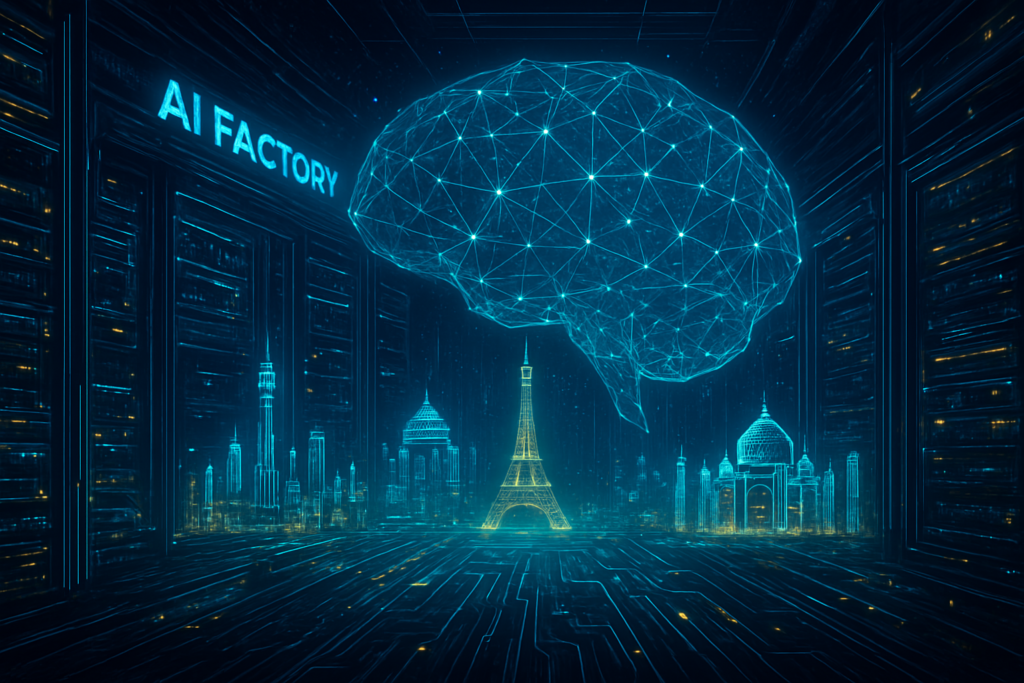
DAVOS, Switzerland — Speaking from the snow-capped heights of the World Economic Forum, NVIDIA Corporation (NASDAQ: NVDA) CEO Jensen Huang delivered a definitive mandate to global leaders: treat artificial intelligence not as a luxury service, but as a sovereign right. Huang’s keynote at Davos 2026 has officially solidified "Sovereign AI" as the year's primary economic and geopolitical directive, marking a pivot from global cloud dependency toward national self-reliance.
The announcement comes at a critical inflection point in the AI race. As the world moves beyond simple chatbots into autonomous agentic systems, Huang argued that a nation’s data—its language, culture, and industry-specific expertise—is a natural resource that must be refined locally. The vision of "AI Factories" owned and operated by individual nations is no longer a theoretical framework but a multi-billion-dollar reality, with Japan, France, and India leading a global charge to build domestic GPU clusters that ensure no country is left "digitally colonized" by a handful of offshore providers.
The Technical Blueprint of National Intelligence
At the heart of the Sovereign AI movement is a radical shift in infrastructure architecture. During his address, Huang introduced the "Five-Layer AI Cake," a technical roadmap for nations to build domestic intelligence. This stack begins with local energy production and culminates in a sovereign application layer. Central to this is the massive deployment of the NVIDIA Blackwell Ultra (B300) platform, which has become the workhorse of 2026 infrastructure. Huang also teased the upcoming Rubin architecture, featuring the Vera CPU and HBM4 memory, which is projected to reduce inference costs by 10x compared to 2024 standards. This leap in efficiency is what makes sovereign clusters economically viable for mid-sized nations.
In Japan, the technical implementation has taken the form of a revolutionary "AI Grid." SoftBank Group Corp. (TSE: 9984) is currently deploying a cluster of over 10,000 Blackwell GPUs, aiming for a staggering 25.7 exaflops of compute capability. Unlike traditional data centers, this infrastructure utilizes AI-RAN (Radio Access Network) technology, which integrates AI processing directly into the 5G cellular network. This allows for low-latency, "sovereign at the edge" processing, enabling Japanese robotics and autonomous vehicles to operate on domestic intelligence without ever sending data to foreign servers.
France has adopted a similarly rigorous technical path, focusing on "Strategic Autonomy." Through a partnership with Mistral AI and domestic providers, the French government has commissioned a dedicated platform featuring 18,000 NVIDIA Grace Blackwell systems. This cluster is specifically designed to run high-parameter, European-tuned models that adhere to strict EU data privacy laws. By using the Grace Blackwell architecture—which integrates the CPU and GPU on a single high-speed bus—France is achieving the energy efficiency required to power these "AI Factories" using its domestic nuclear energy surplus, a key differentiator from the energy-hungry clusters in the United States.
Industry experts have reacted to this "sovereign shift" with a mixture of awe and caution. Dr. Arati Prabhakar, Director of the White House Office of Science and Technology Policy, noted that while the technical feasibility of sovereign clusters is now proven, the real challenge lies in the "data refining" process. The AI community is closely watching how these nations will balance the open-source nature of AI research with the closed-loop requirements of national security, especially as India begins to offer its 50,000-GPU public-private compute pool to local startups at subsidized rates.
A New Power Dynamic for Tech Giants
This shift toward Sovereign AI creates a complex competitive landscape for traditional hyperscalers. For years, Microsoft Corporation (NASDAQ: MSFT), Alphabet Inc. (NASDAQ: GOOGL), and Amazon.com, Inc. (NASDAQ: AMZN) have dominated the AI landscape through their massive, centralized clouds. However, the rise of national clusters forces these giants to pivot. We are already seeing Microsoft and Amazon "sovereignize" their offerings, building region-specific data centers that offer local control over encryption keys and data residency to appease nationalistic mandates.
NVIDIA, however, stands as the primary beneficiary of this decentralized world. By selling the "picks and shovels" directly to governments and national telcos, NVIDIA has diversified its revenue stream away from a small group of US tech titans. This "Sovereign AI" revenue stream is expected to account for nearly 25% of NVIDIA’s data center business by the end of 2026. Furthermore, regional players like Reliance Industries (NSE: RELIANCE) in India are emerging as new "sovereign hyperscalers," leveraging NVIDIA hardware to provide localized AI services that are more culturally and linguistically relevant than those offered by Western competitors.
The disruption is equally felt in the startup ecosystem. Domestic clusters in France and India provide a "home court advantage" for local AI labs. These startups no longer have to compete for expensive compute on global platforms; instead, they can access government-subsidized "national intelligence" grids. This is leading to a fragmentation of the AI market, where niche, high-performance models specialized in Japanese manufacturing or Indian fintech are outperforming the "one-size-fits-all" models of the past.
Strategic positioning has also shifted toward "AI Hardware Diplomacy." Governments are now negotiating GPU allocations with the same intensity they once negotiated oil or grain shipments. NVIDIA has effectively become a geopolitical entity, with its supply chain decisions influencing the economic trajectories of entire regions. For tech giants, the challenge is now one of partnership rather than dominance—they must learn to coexist with, or power, the sovereign infrastructures of the nations they serve.
Cultural Preservation and the End of Digital Colonialism
The wider significance of Sovereign AI lies in its potential to prevent what many sociologists call "digital colonialism." In the early years of the AI boom, there was a growing concern that global models, trained primarily on English-language data and Western values, would effectively erase the cultural nuances of smaller nations. Huang’s Davos message explicitly addressed this, stating, "India should not export flour to import bread." By owning the "flour" (data) and the "bakery" (GPU clusters), nations can ensure their AI reflects their unique societal values and linguistic heritage.
This movement also addresses critical economic security concerns. In a world of increasing geopolitical tension, reliance on a foreign cloud provider for foundational national services—from healthcare diagnostics to power grid management—is seen as a strategic vulnerability. The sovereign AI model provides a "kill switch" and data isolation that ensures national continuity even in the event of global trade disruptions or diplomatic fallout.
However, this trend toward balkanization also raises concerns. Critics argue that Sovereign AI could lead to a fragmented internet, where "AI borders" prevent the global collaboration that led to the technology's rapid development. There is also the risk of "AI Nationalism" being used to fuel surveillance or propaganda, as sovereign clusters allow governments to exert total control over the information ecosystems within their borders.
Despite these concerns, the Davos 2026 summit has framed Sovereign AI as a net positive for global stability. By democratizing access to high-end compute, NVIDIA is lowering the barrier for developing nations to participate in the fourth industrial revolution. Comparing this to the birth of the internet, historians may see 2026 as the year the "World Wide Web" began to transform into a network of "National Intelligence Grids," each distinct yet interconnected.
The Road Ahead: From Clusters to Agents
Looking toward the latter half of 2026 and into 2027, the focus is expected to shift from building hardware clusters to deploying "Sovereign Agents." These are specialized AI systems that handle specific national functions—such as a Japanese "Aging Population Support Agent" or an Indian "Agriculture Optimization Agent"—that are deeply integrated into local government services. The near-term challenge will be the "last mile" of AI integration: moving these massive models out of the data center and into the hands of citizens via edge computing and mobile devices.
NVIDIA’s upcoming Rubin platform will be a key enabler here. With its Vera CPU, it is designed to handle the complex reasoning required for autonomous agents at a fraction of the energy cost. We expect to see the first "National Agentic Operating Systems" debut by late 2026, providing a unified AI interface for citizens to interact with their government's sovereign intelligence.
The long-term challenge remains the talent gap. While countries like France and India have the hardware, they must continue to invest in the human capital required to maintain and innovate on top of these clusters. Experts predict that the next two years will see a "reverse brain drain," as researchers return to their home countries to work on sovereign projects that offer the same compute resources as Silicon Valley but with the added mission of national development.
A Decisive Moment in the History of Computing
The WEF Davos 2026 summit will likely be remembered as the moment the global community accepted AI as a fundamental pillar of statehood. Jensen Huang’s vision of Sovereign AI has successfully reframed the technology from a corporate product into a national necessity. The key takeaway is clear: the most successful nations of the next decade will be those that own their own "intelligence factories" and refine their own "digital oil."
The scale of investment seen in Japan, France, and India is just the beginning. As the Rubin architecture begins its rollout and AI-RAN transforms our telecommunications networks, the boundary between the physical and digital world will continue to blur. This development is as significant to AI history as the transition from mainframes to the personal computer—it is the era of the personal, sovereign supercloud.
In the coming months, watch for the "Sovereign AI" wave to spread to the Middle East and Southeast Asia, as nations like Saudi Arabia and Indonesia accelerate their own infrastructure plans. The race for national intelligence is no longer just about who has the best researchers; it’s about who has the best-defined borders in the world of silicon.
This content is intended for informational purposes only and represents analysis of current AI developments.
TokenRing AI delivers enterprise-grade solutions for multi-agent AI workflow orchestration, AI-powered development tools, and seamless remote collaboration platforms.
For more information, visit https://www.tokenring.ai/.
If you believe this article contains misleading, harmful, or spam content, please let us know.
Report this article




Quotes delayed at least 20 minutes.
By accessing this page, you agree to the Privacy Policy and Terms Of Service.