




Financial News
Illumia Emerges: Transact + CBORD Unify Platforms, Appoint AI Veteran Greg Brown as CEO
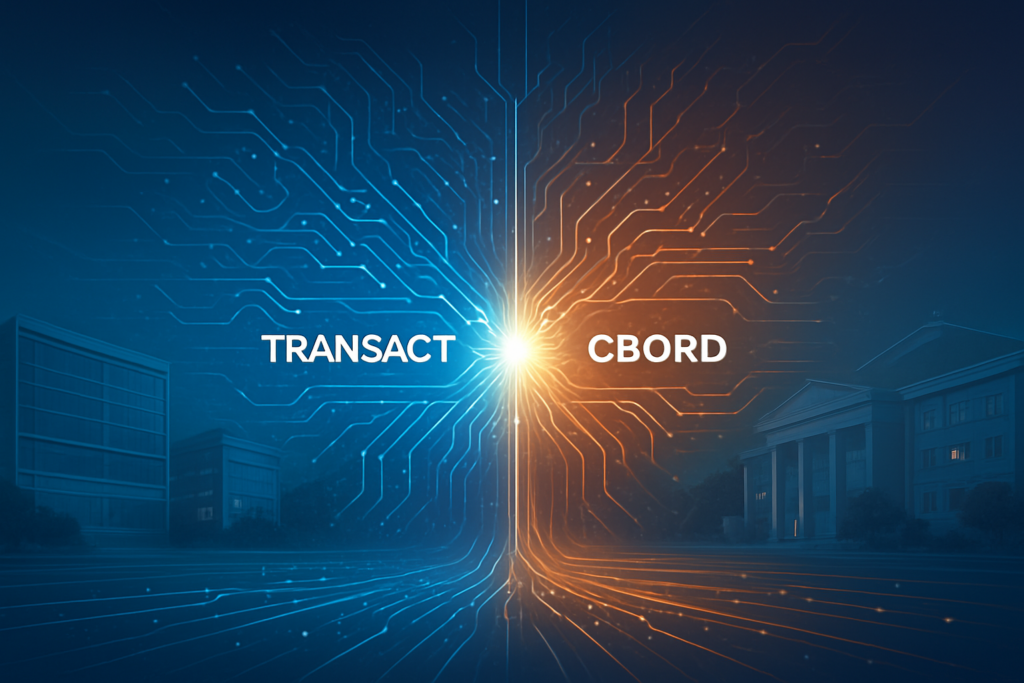
NASHVILLE, TN – December 3, 2025 – In a significant move poised to reshape the landscape of institutional technology, Transact Campus, Inc. and CBORD, two prominent providers of solutions for higher education, healthcare, and senior living, announced today their rebranding as Illumia. This strategic unification, set to officially launch in March 2026, will bring their merged platforms under a single, cohesive identity, signaling a new era of integrated, intelligent solutions. Complementing this transformation, the company also revealed the appointment of seasoned SaaS leader Greg Brown as its new Chief Executive Officer, effective January 5, 2026. Brown's arrival, with his deep expertise in integrating generative AI, underscores Illumia's commitment to infusing artificial intelligence at the core of its unified offerings.
The rebranding and leadership change represent the culmination of a strategic integration following Roper Technologies (NYSE: ROP) acquisition of Transact Campus in August 2024 and its subsequent combination with CBORD. This move aims to deliver a truly integrated campus technology ecosystem, enhancing operational efficiency, security, and overall experiences across diverse institutional environments. The formal unveiling of the Illumia brand and its new visual identity is anticipated at the company's annual conference in Nashville, TN, in March 2026.
A New Era of Integrated Intelligence: Technical Deep Dive into Illumia's Platform
The newly unified Illumia platform is designed to consolidate the distinct strengths of Transact and CBORD, moving from a collection of specialized tools to a comprehensive, cloud-based ecosystem. At its heart, Illumia's technical strategy revolves around a secure, mobile-first, and cloud-native architecture, facilitating enhanced efficiency and accessibility across all its offerings.
Building on Transact's legacy, Illumia will feature robust integrated payment solutions for tuition, student expenses, and various campus commerce transactions. Its foundation in multi-purpose campus IDs and mobile credentials will simplify access control, credentialing, and identity management, including real-time provisioning and deprovisioning of user credentials and access rights synchronized across dining and housing services. From CBORD's expertise, the platform incorporates advanced food and nutrition service management, with integrated functionalities for menu planning, food production, point-of-sale (POS) systems, and mobile commerce, particularly crucial for healthcare and higher education. The platform also promises robust integrated security solutions, exemplified by existing integrations with systems like Genetec Security Center via Transact's Access Control Integration (ACI), automating credential lifecycle events and logging access for comprehensive auditing.
This unified approach marks a significant departure from previous individual offerings. Where institutions once managed siloed systems for payments, access, and dining, Illumia presents a consolidated ecosystem driven by a "single, shared innovation strategy." This aims to streamline operations, enhance the overall user experience through a more connected and mobile-centric approach, and reduce the IT burden on client institutions by offering standardized, less complex integration processes. Furthermore, the platform is designed for future-proofing; for instance, adopting Transact Cloud POS now prepares institutions for a smooth transition to Transact IDX® as older on-premises systems reach end-of-life in 2027 and 2028. The consolidation of data assets from both entities will also enable a more holistic and centralized view of campus operations, leading to richer insights and more informed decision-making through advanced analytics tools like Transact Insights.
Initial reactions from the industry emphasize a strong demand for technical clarity and seamless integration. Town hall webinars hosted post-merger highlighted the community's desire for a transparent technical roadmap. The platform's commitment to robust SaaS integrations, evidenced by several solutions receiving "Verified for SaaS" badges from Ellucian for seamless integration with Ellucian Banner SaaS, builds confidence in its technical reliability. Crucially, Greg Brown's background in scaling SaaS businesses and integrating generative AI into learning products hints at future advancements in AI capabilities, suggesting an industry expectation for intelligent automation and enhanced data processing driven by AI within the Illumia platform.
Competitive Currents: Illumia's AI Ambitions and Market Implications
Illumia's rebranding and its pronounced focus on AI, particularly under the leadership of Greg Brown, are set to send ripples across the AI industry, impacting specialized AI companies, tech giants, and startups alike within the institutional technology sector. The company's strategy positions it as a formidable competitor and a potential partner in the rapidly evolving landscape of intelligent campus solutions.
Specialized AI Developers and Generative AI Startups stand to benefit significantly. Companies offering niche AI solutions relevant to campus environments, such as advanced predictive analytics for student success, sophisticated facial recognition for secure access, or AI-powered resource optimization, could find a strong partner or even an acquisition target in Illumia. Startups focused on developing generative AI tools for personalized content creation, automated support (chatbots), or adaptive learning experiences are particularly well-positioned, as Illumia may seek to integrate these capabilities directly into its platform. Conversely, AI companies offering point solutions without strong integration capabilities may face increased competition from Illumia's comprehensive, unified approach, making it harder for smaller players to gain independent market share if Illumia rapidly corners the integrated campus tech market with its AI-first strategy.
For Tech Giants like Google (NASDAQ: GOOGL), Microsoft (NASDAQ: MSFT), and Amazon (NASDAQ: AMZN) that offer broad AI services and cloud infrastructure, Illumia's emergence means a more specialized and integrated competitor in the campus technology space. Illumia, with its dedicated focus on institutional environments, could potentially outperform generalist offerings in specific needs. However, these tech giants could also become crucial partners, providing underlying AI models, cloud infrastructure, and development tools that Illumia can then tailor. Illumia's aggressive push into AI will likely pressure tech giants to further innovate their own AI offerings for the education and institutional sectors, potentially accelerating the development of more tailored solutions.
Startups in campus technology face a dynamic environment. Those focusing on highly innovative, AI-powered solutions that can seamlessly integrate with a larger platform like Illumia's may thrive, potentially finding a significant distribution channel or even an acquirer. However, startups offering single-feature solutions or struggling with scalability might find it challenging to compete against Illumia's integrated platform, especially if Illumia begins offering similar functionalities as part of its core product. This shift could also influence venture capital and private equity firms, prompting them to shift investments towards startups demonstrating strong AI capabilities and a clear path to integration with larger platforms.
Illumia's strategy could be disruptive by consolidating solutions, reducing the need for institutions to manage multiple disparate systems. This simplification, coupled with an elevated user experience through personalized support and adaptive tools powered by AI, could set a new standard for campus technology. The unified, AI-enhanced platform will also generate vast amounts of data, enabling institutions to make more informed decisions, and potentially opening new service and revenue opportunities for Illumia, such as advanced analytics as a service or premium personalized features.
Beyond the Campus: Wider Significance in the AI Landscape
The rebranding of Transact + CBORD to Illumia, with its unified platform and pronounced AI focus under Greg Brown's leadership, resonates deeply with broader trends in the artificial intelligence landscape. This strategic pivot by a major institutional technology provider underscores the mainstreaming of AI as a critical imperative across diverse sectors, moving beyond niche applications to become a foundational element of enterprise solutions.
Illumia's AI emphasis aligns with several key trends: the demand for personalized experiences and engagement (e.g., tailored recommendations, real-time support via chatbots), the drive for operational efficiency and automation (automating administrative tasks, optimizing resource utilization), and the reliance on data-driven decision-making through predictive analytics. Greg Brown's experience with generative AI at Udemy is particularly timely, as the integration of such sophisticated AI into productivity suites by major tech vendors is setting new expectations for intelligent functionalities within enterprise software. This positions Illumia to be a key enabler of "smart campus" ecosystems, leveraging IoT and AI for enhanced security, sustainability, and improved services.
The wider impacts are substantial. For users—students, faculty, patients—AI could mean more seamless, intuitive, and personalized interactions with institutional services. For institutions, AI promises significant cost savings, optimized resource allocation, and improved decision-making, ultimately enhancing sustainability. Moreover, AI-powered security systems can provide more robust protection. However, this increased reliance on AI also brings potential concerns: paramount among them are data privacy and ethics, given the extensive personal data collected and analyzed. Algorithmic bias is another critical concern, where models trained on biased data could perpetuate inequalities. Implementation challenges, including high upfront costs and integration with legacy systems, and the potential for a digital divide in access to advanced AI tools, also need careful consideration.
In the history of AI in institutional technology, Illumia's move represents a significant next-generation milestone. Early milestones involved the shift from manual records to basic automation with mainframes, then to internet-based platforms, and later to big data and early predictive analytics. The COVID-19 pandemic further accelerated digital transformation. Illumia's strategy, with a CEO specifically chosen for his AI integration experience, moves beyond reactive data repositories to "proactive engagement platforms" that leverage AI for deep personalization, predictive insights, and streamlined operations across the entire institutional ecosystem. This isn't just about adopting AI tools; it's about fundamentally reshaping the "digital experience" and "institutional effectiveness" with AI at its core.
The Horizon Ahead: Future Developments and AI's Promise
As Illumia steps into its new identity in March 2026, the near-term and long-term developments will be heavily influenced by its unified platform strategy and the aggressive integration of AI under Greg Brown's leadership. The company aims to bring clarity, intelligence, and innovation to core operations across its target markets.
In the near term, the focus will likely be on the seamless technical unification of the Transact and CBORD platforms, creating a more cohesive and efficient technological experience for existing clients. This will involve solidifying a "single, shared innovation strategy" and ensuring a smooth transition for customers under the new Illumia brand. Greg Brown's immediate priorities will likely include defining the specific AI integration strategy, translating his generative AI experience at Udemy into tangible product enhancements for campus technology. This could involve embedding AI for real-time decision-making and predictive insights, moving beyond mere reporting to automated workflows and intelligent systems.
Looking long term, potential applications and use cases are vast. Illumia's AI integration could lead to:
- Personalized Learning and Support: AI-powered adaptive learning systems, virtual tutors, and 24/7 AI assistants for students.
- Enhanced Accessibility: Real-time captioning, translation, and accommodations for learning disabilities.
- Streamlined Administration: AI automation for tuition payments, campus access, dining services, and predictive maintenance for IT systems.
- Improved Student Success: Predictive analytics to identify at-risk students for timely intervention.
- Advanced Research Support: AI assistance for literature reviews, data processing, and collaborative research.
- Immersive Training: AI avatars for interactive training scenarios, potentially leveraging technologies similar to Illumia Labs.
- Enhanced Security: AI-driven continuous monitoring for cyber threats.
However, several challenges need to be addressed. Paramount among these are data privacy and security, ensuring responsible data handling and protection of sensitive information. Ethical implications and bias in AI algorithms, particularly in areas like automated grading, require careful governance and human oversight. Institutions must also guard against over-reliance on AI, ensuring that critical thinking skills are not hindered. Integration complexities with diverse legacy systems, technological uncertainty in a rapidly evolving AI market, and concerns around academic integrity with generative AI also pose significant hurdles. Furthermore, potential job displacement due to AI automation will necessitate workforce adaptation strategies.
Experts predict a transformative period for campus technology. AI is increasingly viewed as an ally, transforming pedagogy and learning. AI literacy will become a fundamental skill for both students and faculty. AI will continue to personalize learning and streamline administrative tasks, potentially leading to significant administrative cost savings. Strategic AI integration will move from static reporting to dynamic, predictive analysis, and human oversight will remain crucial for ethical and effective AI deployment. A rise in state and federal legislation concerning AI use in education is also anticipated, alongside new financial aid opportunities for AI-related studies and a radical reinvention of curricula to prepare graduates for an AI-powered future.
The Dawn of Illumia: A Comprehensive Wrap-Up
The rebranding of Transact + CBORD to Illumia, coupled with the appointment of Greg Brown as CEO, marks a pivotal moment for institutional technology. This strategic move is not merely a name change but a profound commitment to unifying platforms and embedding artificial intelligence at the core of critical operations across higher education, healthcare, and senior living. The official launch in March 2026 will culminate the post-merger integration, forging a cohesive identity and a singular innovation strategy.
Key takeaways include the establishment of strategic clarity under the new Illumia brand, a clear signal that AI is a foundational element for the company's future, and the leadership of Greg Brown, whose extensive experience in scaling SaaS businesses and integrating generative AI positions Illumia for aggressive growth and technological advancement. The company aims to revolutionize operational and experiential touchpoints, enhancing daily interactions through intelligent solutions.
In the broader AI history, this development signifies the mainstreaming of AI, particularly generative AI, into specialized enterprise software. It highlights a shift towards practical, customer-centric AI applications focused on improving efficiency, personalization, and user experience in real-world operational contexts. Illumia's strategy showcases AI not just as a feature, but as a core enabler of platform integration and strategic coherence for complex merged entities.
The long-term impact could be substantial, potentially setting new industry standards. Illumia has the potential to offer highly personalized and efficient experiences for students, patients, and staff, drive significant operational efficiencies for institutions, and establish a strong competitive advantage through early and effective AI integration. The unified, AI-powered platform will foster data-driven innovation and could compel other industry players to accelerate their own AI adoption and platform integration, driving broader industry transformation.
In the coming weeks and months, watch for:
- Specific AI product announcements: Details on how AI will be integrated into Illumia's campus card systems, dining services, and patient engagement platforms.
- Platform integration roadmap: Communications regarding a new unified user interface, single sign-on capabilities, or a consolidated data analytics dashboard.
- Customer pilot programs and case studies: Demonstrations of real-world benefits from the unified and AI-enhanced solutions.
- Strategic partnerships and acquisitions: Potential collaborations with AI firms or acquisitions to bolster capabilities.
- Further details from Greg Brown: Communications outlining his vision for AI's role in product development and market expansion.
- Competitive responses: How other players in these sectors react to Illumia's aggressive AI and unification strategy.
This content is intended for informational purposes only and represents analysis of current AI developments.
TokenRing AI delivers enterprise-grade solutions for multi-agent AI workflow orchestration, AI-powered development tools, and seamless remote collaboration platforms.
For more information, visit https://www.tokenring.ai/.
If you believe this article contains misleading, harmful, or spam content, please let us know.
Report this articleMore News
View More


Recent Quotes
View MoreQuotes delayed at least 20 minutes.
By accessing this page, you agree to the Privacy Policy and Terms Of Service.