




Financial News
Sunrun (NASDAQ:RUN) reports bullish Q3 2026, stock soars

Residential solar energy company Sunrun (NASDAQ: RUN) announced better-than-expected revenue in Q3 2026, with revenue up 51.7% year on year to $1.10 billion. Its GAAP profit of $0.56 per share was significantly above analysts’ consensus estimates.
For more on Sunrun, read the full research report for free.
Sunrun (RUN) Q3 2026 highlights:
- Revenue $1.10 billion vs S&P analysts’ consensus estimates of $750.3 million (51.7% year-on-year growth, 46.5% beat)
- EPS (GAAP) $0.56 vs analysts’ consensus estimates of $0.22 (significant beat)
- Operating margin 14%, up from 0.5% in the same quarter last year
- Free cash flow $299.2 million, up from -$123 million in the same quarter last year
- Customers 1.23 million, up from 1.21 million in the previous quarter
- Market capitalization $2.09 billion
“Sunrun has returned its direct business to growth, with installations increasing 9% year-over-year. Sunrun is the nation's largest Residential Independent Power Producer. We hit a 75% attachment rate of storage assets, the highest in our history. The need for affordable, reliable power has never been more evident, and our storage-first offering is meeting it. We are positioning the business for strong growth, bringing on some of the best talent in the industry and scaling deliberately, with a focus on customer experience and asset quality. And as that engine scales, we're aiming to unlock new ways to monetize the network we've already built, from distributed power plant programs to emerging data center and grid edge applications, creating new streams of Cash Generation,” said Mary Powell, Sunrun’s chief executive officer.
Revenue growth
A company’s long-term revenue performance can indicate its overall quality. Any business can post a good quarter or two, but the best consistently grow over the long term. Sunrun’s revenue grew at a strong 20.8% compounded annual growth rate over the last five years. Its growth beat the average industrials company and shows its offerings resonate with customers.
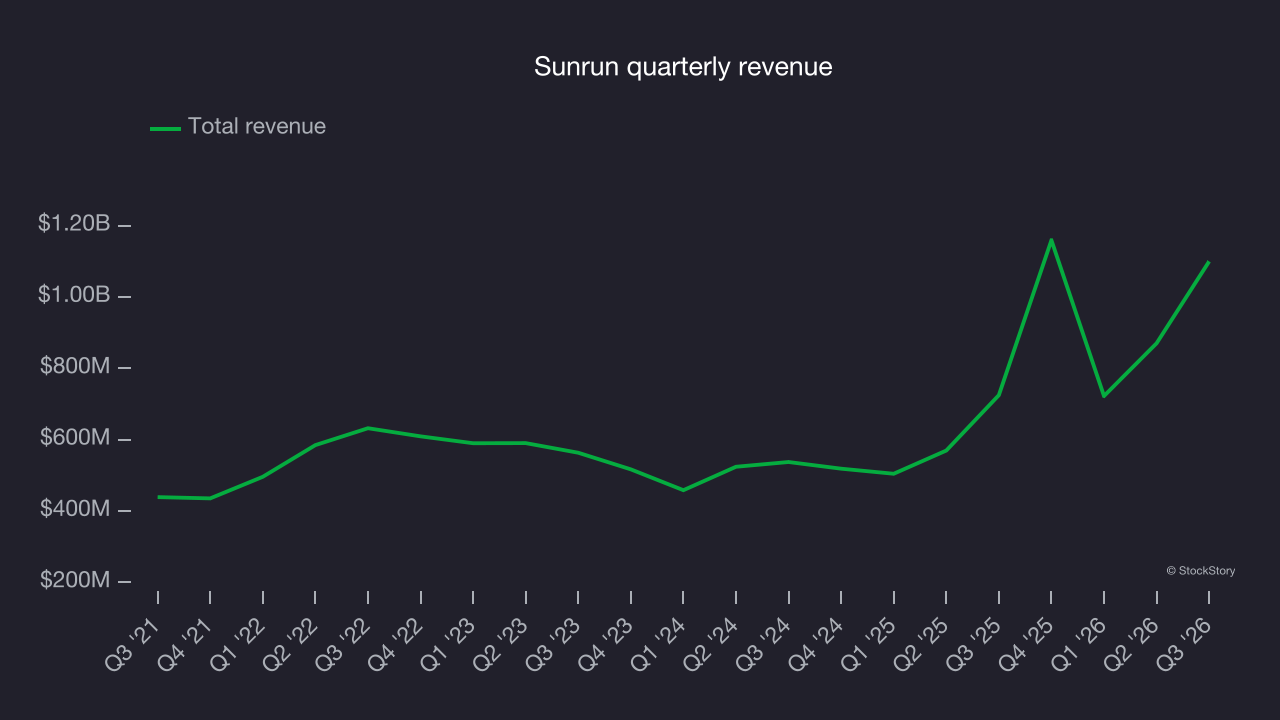
Long-term growth is the most important, but within industrials, a half-decade historical view may miss new industry trends or demand cycles. Sunrun’s annualized revenue growth of 37.5% over the last two years is above its five-year trend, suggesting its demand was strong and recently accelerated. 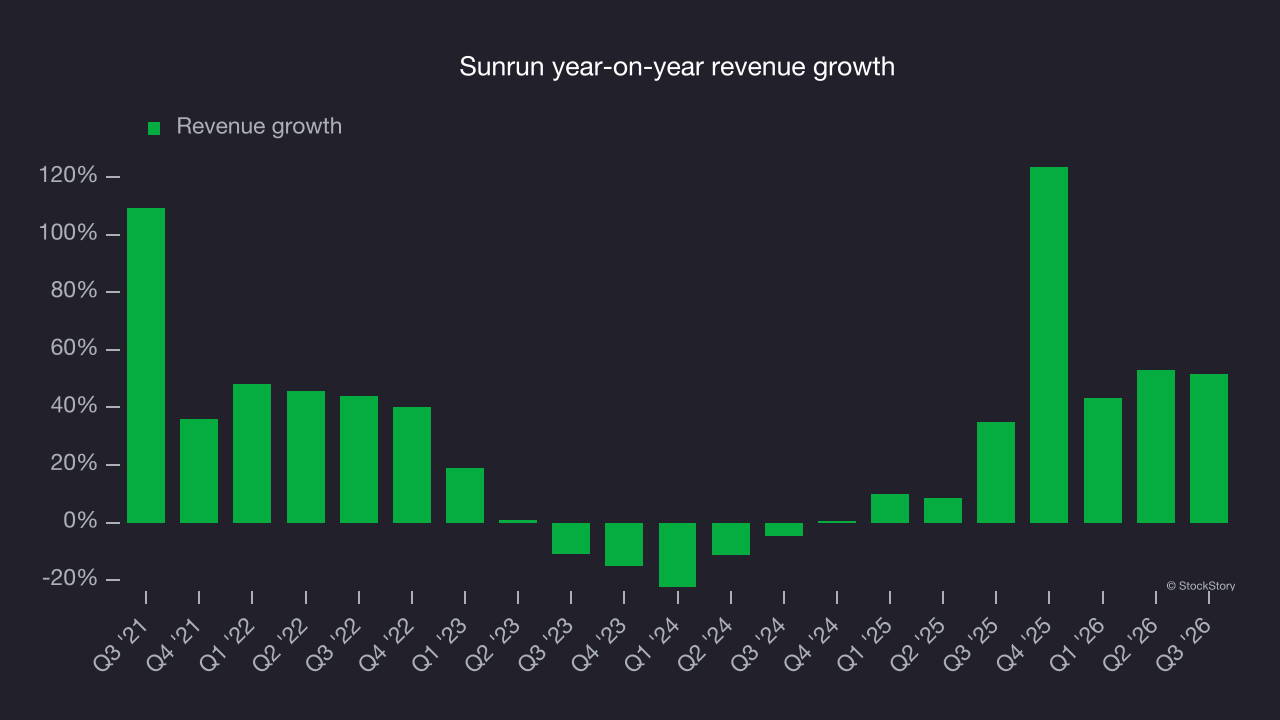
Sunrun also reports its number of customers, which reached 1.23 million in the latest quarter. Over the last two years, Sunrun’s customer base averaged 566% year-on-year growth. Customer growth outpaced revenue growth, indicating that the average customer spent less money each year on the company’s products and services. 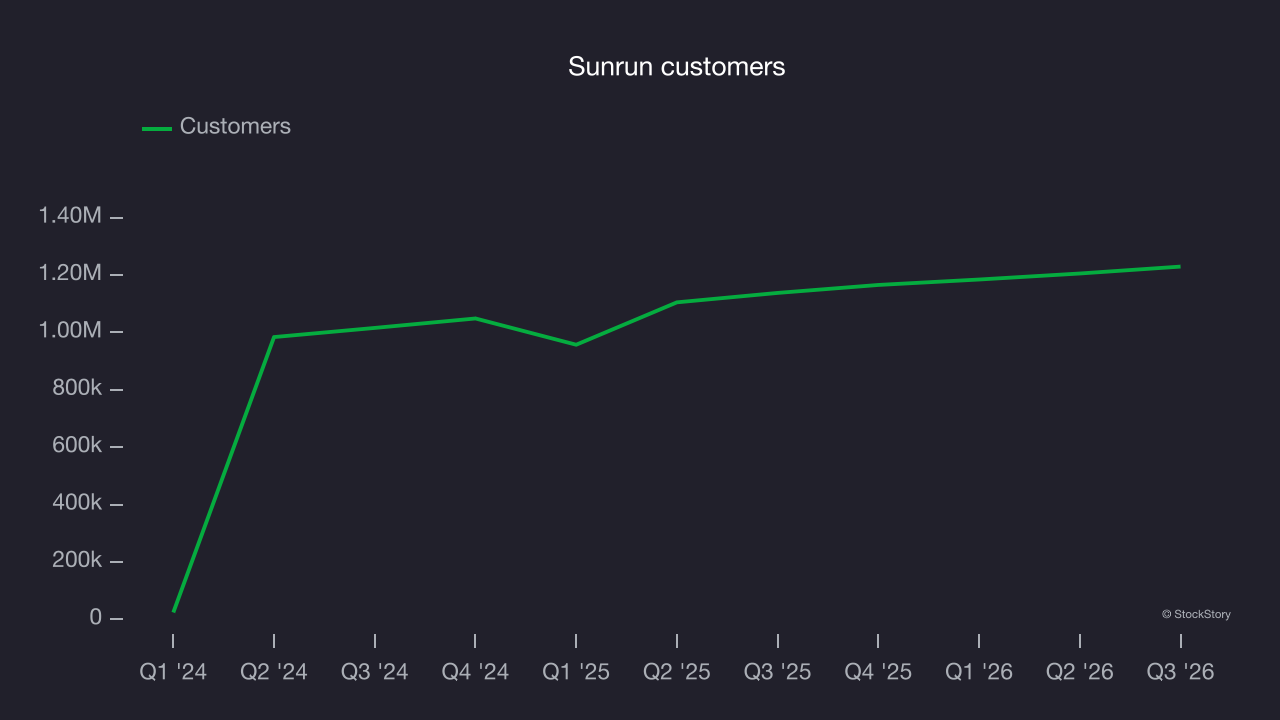
This quarter, Sunrun reported strong year-on-year revenue growth of 51.7%, and its $1.10 billion of revenue beat Wall Street’s consensus estimates by 46.5%.
Looking ahead, sell-side analysts expect revenue to decline by 21% over the next 12 months, according to S&P, a deceleration versus the last two years. That disappointing projection implies its products and services will face some demand challenges.
Operating margin
Operating margin is a key measure of profitability. Think of it as net income, or the bottom line, excluding the impact of taxes and interest on debt, which are less connected to business fundamentals.
Although Sunrun was profitable this quarter from an operational perspective, it has generally struggled over the longer term. Its expensive cost structure has contributed to an average operating margin of negative 51.4% over the last five years. Unprofitable industrials companies require extra attention because they could be vulnerable in a downturn. That raises doubts about the business’s ability to endure a full cycle.
On the positive side, Sunrun’s operating margin rose by 38 percentage points over the last five years, as its revenue growth gave it operating leverage. Still, it will take much more for the company to show consistent profitability.
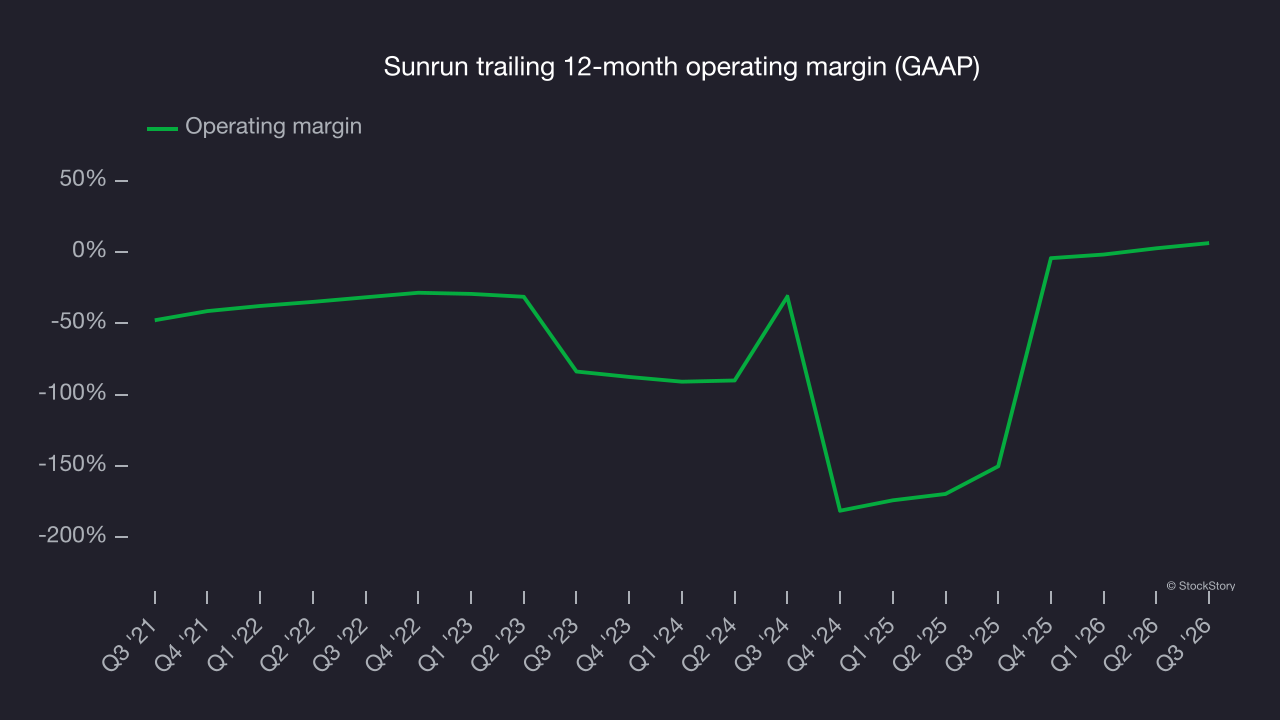
In Q3, Sunrun generated an operating margin of 14%, up 13.5 percentage points year on year. The increase was solid, and its operating margin rose more than its gross margin, indicating greater efficiency in expenses such as marketing, research and development and administrative overhead.
Earnings per share
Revenue trends explain a company’s historical growth, but the long-term change in earnings per share, or EPS, points to the profitability of that growth. For example, a company could inflate its revenue through excessive spending on advertising and promotions.
Sunrun’s full-year EPS flipped from negative to positive over the last five years. This is a good sign and shows it’s at an inflection point.
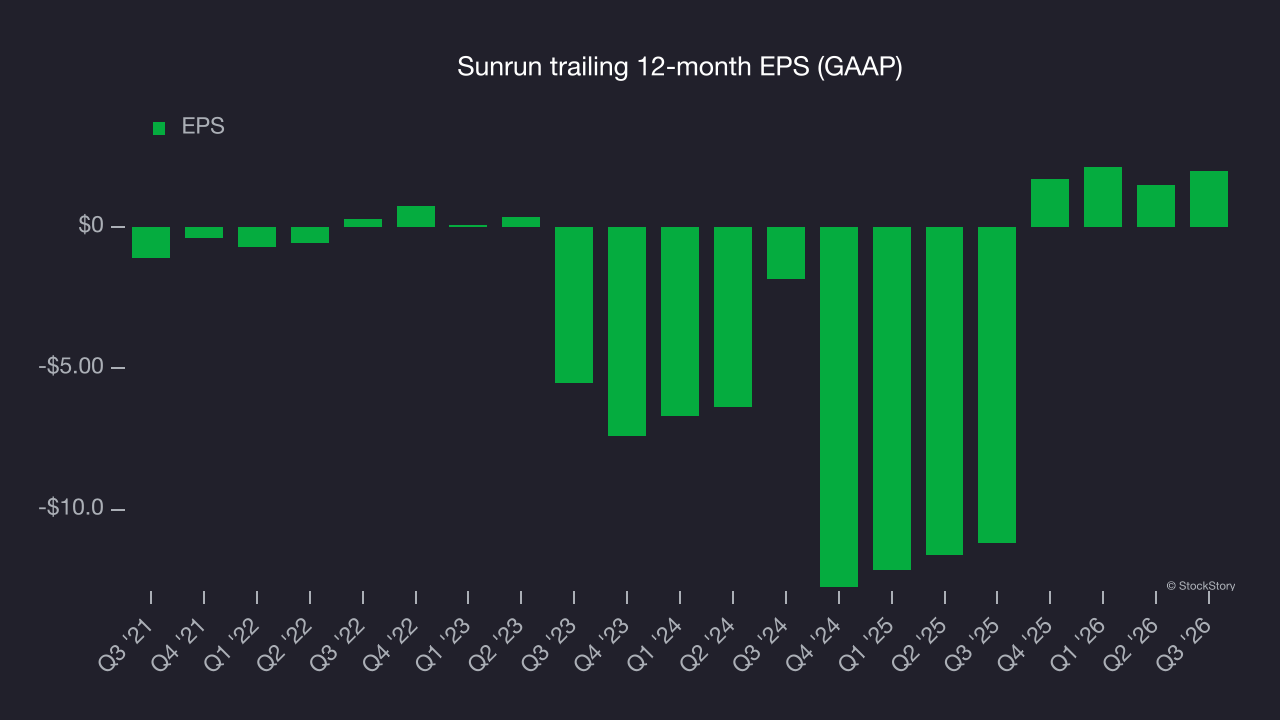
As with revenue, examining EPS over a shorter period can reveal a change in the business.
For Sunrun, its two-year annual EPS growth of 75.7% was higher than its five-year trend. Accelerating earnings growth is a positive sign, especially from an already high base.
In Q3, Sunrun reported EPS of $0.56, up from $0.06 in the same quarter last year. This result easily cleared analysts’ consensus estimates, a positive outcome for shareholders. Over the next 12 months, Wall Street expects Sunrun’s full-year EPS to shrink by 60.8% from $1.98 to $0.78, according to S&P.
Key takeaways from Sunrun’s Q3 results
Sunrun’s revenue beat Wall Street’s consensus estimates by a wide margin, and EPS also topped analysts’ consensus expectations, making this a strong quarter with clear positives. Shares surged 5.8% to $9.39 immediately after the results.
Sunrun may have had a good quarter, but an investment decision calls for a broader view. Consider its valuation, business quality and latest quarterly results. Read the full research report here (it’s free).
If you believe this article contains misleading, harmful, or spam content, please let us know.
Report this articleMore News
View More

Recent Quotes
View MoreQuotes delayed at least 20 minutes.
By accessing this page, you agree to the Privacy Policy and Terms Of Service.