




Financial News
Zebra (NASDAQ:ZBRA) surprises with Q3 2026 sales but stock drops

Enterprise data capture company Zebra Technologies (NASDAQ: ZBRA) reported Q3 2026 results beating Wall Street’s revenue expectations, with revenue up 22.3% year on year to $1.61 billion. Revenue guidance for next quarter was $1.65 billion at the midpoint, 2.8% above analysts’ consensus estimates. Its non-GAAP profit of $4.95 per share was 0.9% above analysts’ consensus estimates.
For more on Zebra, read our full research report for free.
Zebra (ZBRA) Q3 2026 highlights:
- Revenue $1.61 billion vs S&P analysts’ consensus estimates of $1.57 billion (22.3% year-on-year growth, 2.8% beat)
- Adjusted EPS $4.95 vs S&P analysts’ consensus estimates of $4.91 (0.9% beat)
- Adjusted EBITDA $349 million vs analysts’ consensus estimates of $346.9 million (21.6% margin, 0.6% beat)
- Revenue guidance $1.65 billion at the midpoint for Q4 2026, above analysts’ consensus estimates of $1.61 billion
- Adjusted EPS guidance $5.20 at the midpoint for Q4 2026, roughly in line with what analysts were expecting
- Operating margin 14.7%, in line with the same quarter last year
- Free cash flow margin 18.6%, up from 16.4% in the same quarter last year
- Organic revenue rose 11.3% year on year (beat)
- Market capitalization $17.09 billion
Mr. Burns added, "We remain confident in the growth drivers supporting our business, and our ability to capture the opportunity ahead. We are driving operating productivity as we scale to meet the strong demand we are seeing for our solutions. Together, these efforts support our increased full-year outlook and position us well for sustainable profitable growth as we continue to benefit from trends in automation and Physical AI."
Revenue growth
Reviewing a company’s long-term revenue performance reveals insights into its quality. Any business can experience short-term success, but top-performing ones sustain growth for years.
With $6.14 billion in revenue over the past 12 months, Zebra is one of the larger companies in the business services industry and benefits from a well-known brand that influences purchasing decisions. However, its scale is a double-edged sword because it’s harder to find incremental growth when you’ve penetrated most of the market. To accelerate revenue growth, Zebra likely needs to optimize its pricing or focus on new offerings and international expansion.
Zebra’s 2.3% annualized revenue growth over the last five years was sluggish. This shows it failed to generate substantial demand.
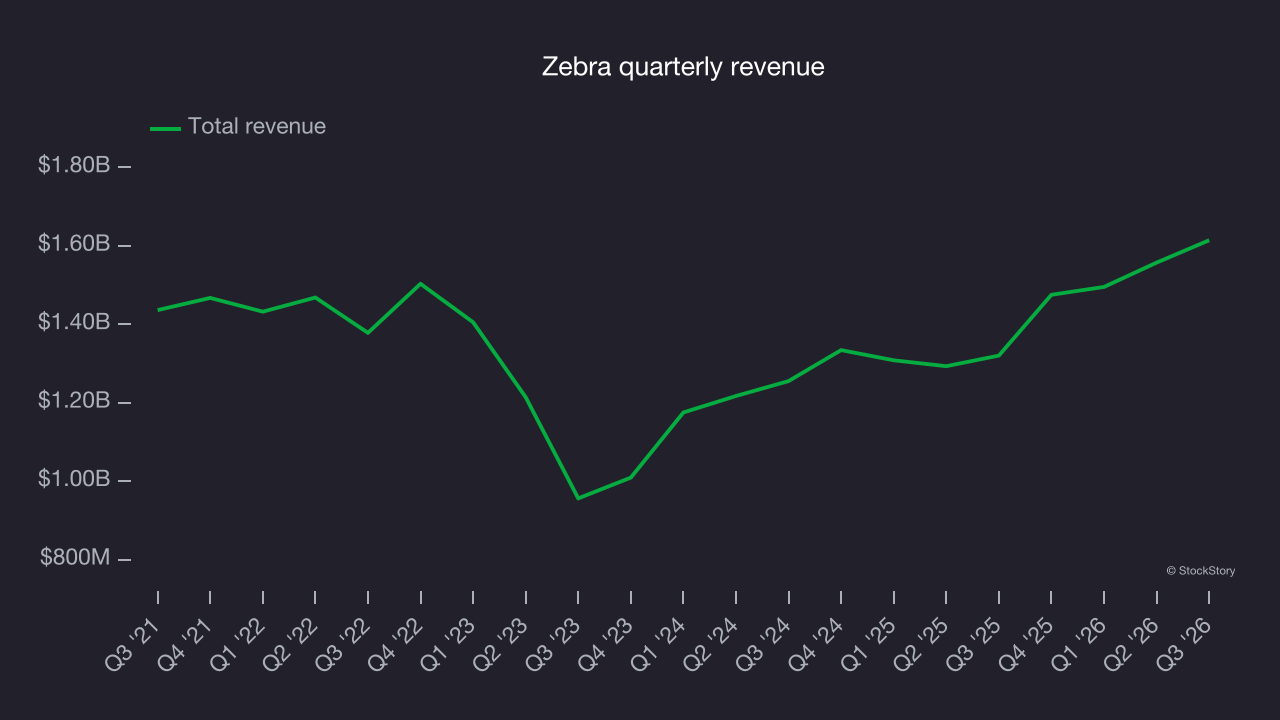
Long-term growth matters most, but within business services, a half-decade historical view may miss recent innovations or disruptive industry trends. Zebra’s annualized revenue growth of 14.8% over the last two years is above its five-year trend, suggesting its demand recently accelerated. 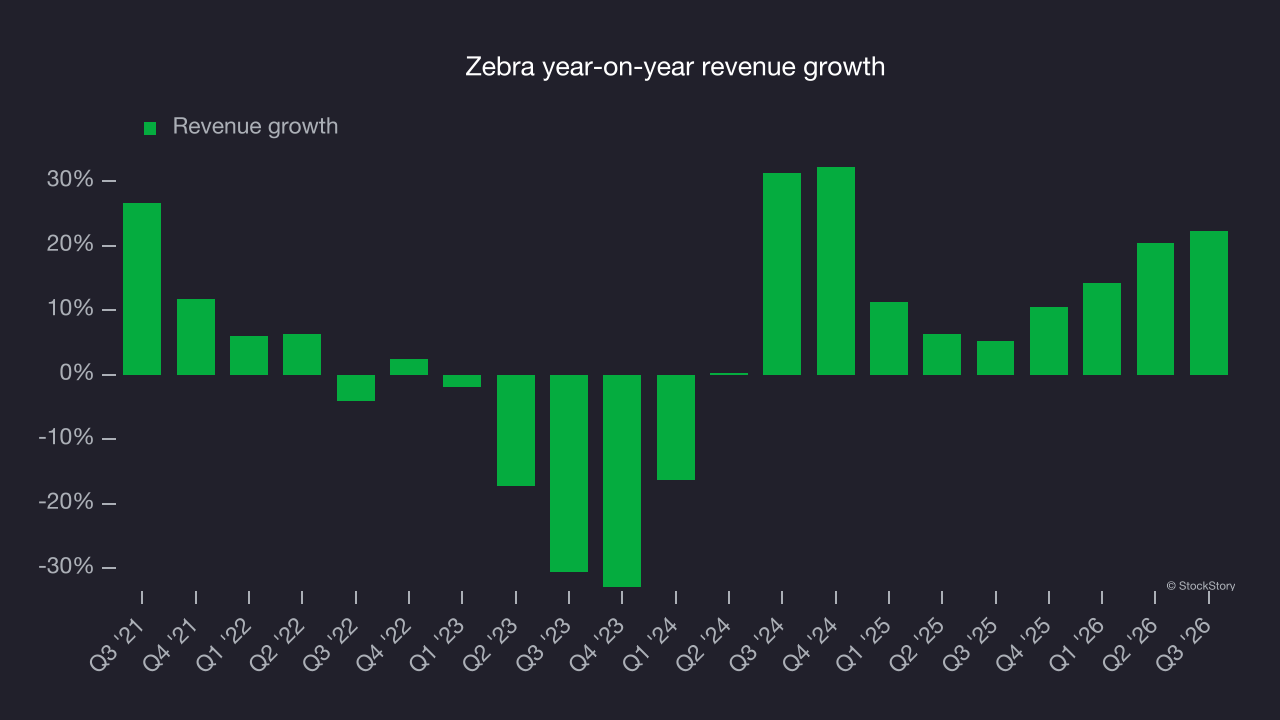
Organic revenue offers a closer look at the company’s revenue dynamics by stripping out one-time events like acquisitions and currency fluctuations that don’t accurately reflect its fundamentals. Over the last two years, Zebra’s organic revenue averaged 11.1% year-on-year growth. Total revenue growth outpaced organic growth over that period, indicating that some combination of acquisitions and foreign exchange rates boosted its headline results. 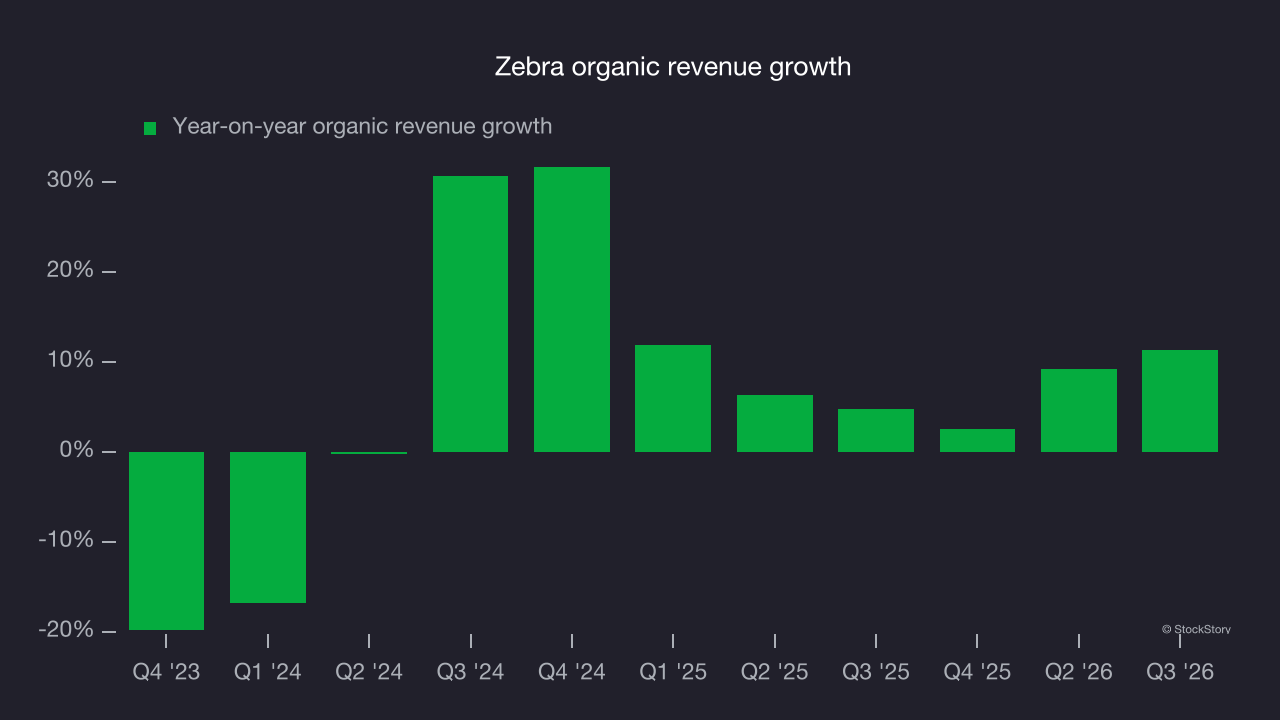
This quarter, Zebra reported year-on-year revenue growth of 22.3%, and its $1.61 billion in revenue topped Wall Street’s consensus estimates by 2.8%. Company management is guiding for a 12% year-on-year increase in revenue next quarter.
Looking further ahead, sell-side analysts expect revenue to grow 6% over the next 12 months, according to S&P, a deceleration versus the last two years. Despite the slowdown, this projection is above average for the sector and suggests the market is forecasting some success for its newer products and services.
Adjusted operating margin
Zebra has performed well over the last five years. It demonstrated high profitability for a business services company, with an average adjusted operating margin of 19.8%.
Analyzing the trend in its profitability, Zebra’s adjusted operating margin rose by 1.6 percentage points over the last five years, as its revenue growth gave it operating leverage.
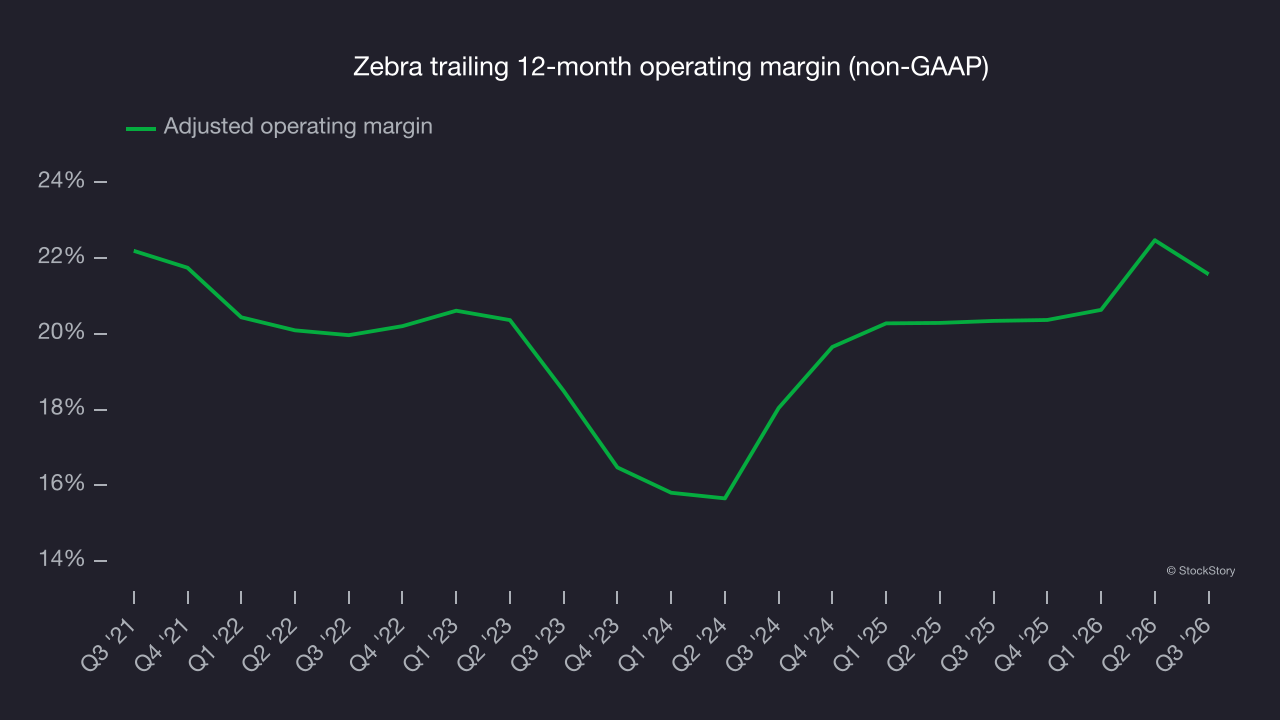
This quarter, Zebra generated an adjusted operating margin of 17.3%, down 3 percentage points year on year. This contraction shows it was less efficient because its expenses grew faster than its revenue.
Earnings per share
Revenue trends explain a company’s historical growth, but the long-term change in earnings per share (EPS) points to the profitability of that growth – for example, a company could inflate its revenue through excessive spending on advertising and promotions.
Zebra’s weak 2.1% annual EPS growth over the last five years aligns with its revenue performance. On the positive side, this indicates its incremental revenue was profitable.
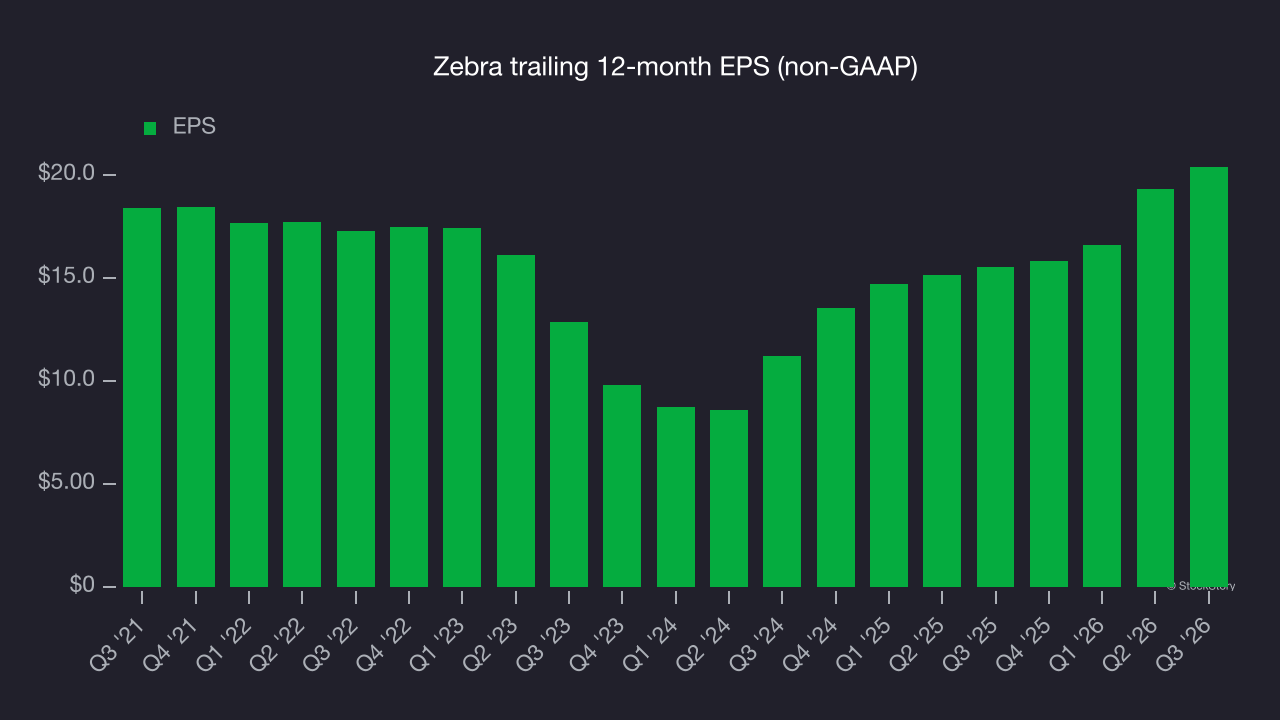
As with revenue, we analyze EPS over a more recent period because it can provide insight into an emerging theme or development for the business.
Zebra’s two-year annual EPS growth of 34.8% was strong and topped its 14.8% two-year revenue growth.
Examining Zebra’s quality of earnings can provide a better understanding of its performance. A two-year view shows that Zebra has repurchased its stock, shrinking its share count by 7.9%. This indicates its EPS outperformed its revenue not because of increased operational efficiency but financial engineering, as buybacks boost per share earnings. 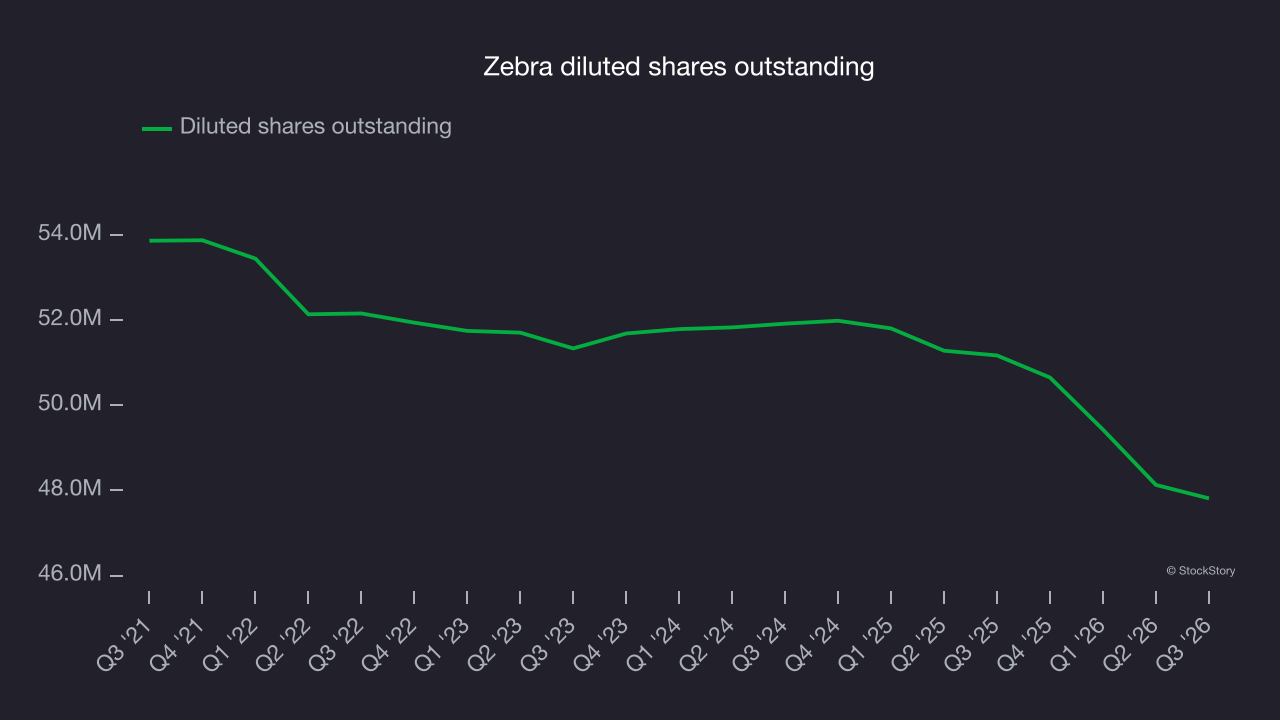
In Q3, Zebra reported adjusted EPS of $4.95, up from $3.88 in the same quarter last year. This result was close to analysts’ consensus estimates. Over the next 12 months, Wall Street expects Zebra’s full-year EPS to grow 6.3% from $20.38 to $21.66, according to S&P.
Key takeaways from Zebra’s Q3 results
Zebra’s revenue outlook for next quarter came in well above analysts’ consensus estimates, and organic revenue also topped Wall Street’s consensus. Those positives made for a decent quarter, but investors were likely hoping for more. Shares tumbled 5.9% to $340 immediately after the report.
To assess whether Zebra is a buy at its current price, consider its valuation, business quality and latest quarterly results. Read the free full research report for more on Zebra.
If you believe this article contains misleading, harmful, or spam content, please let us know.
Report this articleMore News
View More



Recent Quotes
View MoreQuotes delayed at least 20 minutes.
By accessing this page, you agree to the Privacy Policy and Terms Of Service.