




Financial News
API 5CT Casing and Tubing: How to Compare OCTG Quotes Beyond Price per Ton
A price per ton is the easiest number to compare on an OCTG tender and the least reliable. Two offers for API 5CT casing and tubing can name the same grade and still describe different products: one is a Monogrammed pipe with coupled connections, third-party inspection and export packing, while the other is a plain-end pipe that leaves couplings, thread protectors and documentation “to be agreed”. Ranked by price per ton, the second offer wins. After the missing items are priced, it often does not.
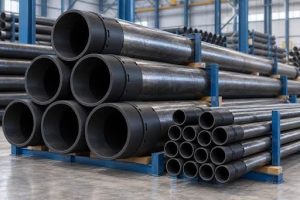
This guide sets out how to build a like-for-like comparison: what to fix in the specification, which parts of API 5CT change what you receive, how to verify manufacturer status, and how to normalize price and delivery. It ends with a worked example using illustrative numbers.
Key takeaways
|
Start with the well requirement, not the price list
Casing and tubing do different jobs. Casing supports the borehole and isolates formations, so it is selected by collapse, burst and axial load for each hole section. Production tubing carries produced or injected fluids, so connection tightness, corrosion environment and running conditions drive the choice. The sizes, weights, grades and connections therefore come from the well design and the casing and tubing programme, not from a stock list.
Prepare separate purchasing lines for each string. For tubing, list outside diameter, nominal weight or wall thickness, grade and type, length range and end finish, using supplier information such as the API 5CT tubing page as a reference for what the product line covers. For casing, use the schedule approved for the relevant section of the well and the same discipline for API 5CT casing. A stronger grade or heavier wall is not an automatic upgrade. It can change running loads, drift, connection compatibility and cost, so any substitute goes through engineering approval and is recorded as a deviation.
Fix the API 5CT edition, grade, type and PSL level
The current edition is the 10th. For Monogram purposes, API applied it to products manufactured on or after July 1, 2019, and the edition has since been followed by an addendum and errata that purchasers should include in the contract basis; see API’s 5CT announcement and 10th Edition Addendum 1. Changes that are relevant to buyers include:
- Regrouped material grades, and removal of grade M65.
- Replacement of the old supplementary requirement for test certificates with new mill test report and certification requirements.
- Hardness requirements for L80, C90, T95 and C110 updated to align with NACE MR0175, which matters for sour service.
- Increased coupling outside-diameter wall thickness for 4-1/2, 5 and 5-1/2 inch casing, with related weight recalculations.
- New scope note referencing RP 5C6 for large-diameter PSL 2 casing such as conductor pipe.
If a quotation references an earlier edition, ask why, and whether your project accepts it. The grade designation also needs its type, for example L80 Type 1, L80 9Cr or L80 13Cr, and N80 Type 1 or Type Q, because these are different materials with different heat treatment and service suitability. Common grade families are H40, J55 and K55 for lower-strength service, N80 and L80 for medium strength (L80 widely used where sulfide stress cracking is a concern), C90, T95 and C110 for controlled-hardness sour service, and P110 and Q125 for high strength.
Product specification level (PSL-1, PSL-2, PSL-3) adds progressively tighter requirements for chemistry, testing and quality control. Monogram licenses are issued by grade and PSL, so a plant licensed for J55 at PSL 1 is not automatically licensed for J55 at PSL 2. The delivery condition (as-rolled, normalized, quenched and tempered) and manufacturing route (seamless or welded where permitted) belong in the quotation too. Anything that departs from the inquiry goes into a deviation list with an approve, reject or clarify decision for each item.
Verify the manufacturer and the Monogram scope
Product compliance and manufacturer licensing are separate checks. Where the Monogram is required, check the producing facility and the scope of its license on the API Composite List. A license certificate normally lists the grades, PSL levels and product forms covered, such as seamless casing or tubing, couplings, coupling stock and pup joints, and shows an effective and expiry date. A catalogue statement, an ISO 9001 certificate or a logo printed on a mill test report does not establish any of this.
This matters most in trading structures where the selling company, the pipe mill and the threading shop are three different entities. Ask each supplier to name the pipe mill, the heat treater, the coupling maker and the thread processor, and confirm the license of each against the scope of what it is making. A pipe made at a licensed mill but threaded at an unlicensed shop is not a Monogrammed product.
Reconcile connections, couplings and accessories
Connection scope changes both price and delivery. For API connections, state the designation, whether the pipe is non-upset, external upset or integral, and the end finish (plain end, threaded and coupled, or other). Tubing and casing connections follow different rules and should not share a generic “API thread” line. Confirm who threads the pipe, to which gauging practice, and how thread inspection records are issued.
For a premium connection, name the exact connection and size, and confirm any licence, qualification or owner-approval requirements. “Equivalent” premium connections need a technical review against your running and service requirements. A similar thread form or matching size is not equivalence.
Make the accessories explicit. Does the price include couplings made-up at one end, thread protectors suitable for the transport route, pup joints in specified lengths and grades, and drift verification? A low pipe price that leaves couplings and pups as separate orders can put them on the critical path just when the rig needs the string.
Compare inspection, testing and documents
The comparison should separate three layers: tests required by API 5CT for the ordered product, additional purchaser requirements from the project, and third-party inspection. Typical items include dimensional checks, drift testing, hydrostatic testing, non-destructive examination, hardness for the controlled-hardness grades, and thread inspection. “100% tested” tells you nothing until the method, coverage, acceptance criteria and records are stated.
| Document | What it should show | Common gap |
| Mill test report | Heat and lot numbers, chemistry, mechanical tests, heat treatment, grade, PSL, standard edition | Sample certificate supplied in place of one for the actual shipment |
| NDE and hydrostatic records | Method, coverage, acceptance level, test pressure and operator qualification | Records not linked to pipe numbers |
| Thread inspection | Gauging results, thread type and inspector | Not included in scope for couplings or pups |
| Tally and packing list | Piece count, lengths, marking, bundle identification and heat references | Lengths or weights quoted as nominal only |
Ask when the documents are available. Pre-shipment review of the certificates and inspection records is far easier than discovering a nonconformity once the pipe is on the vessel.
Put price and delivery on a common basis
Start with the unit of sale. Quantities may be quoted by piece, by length or by mass, and nominal mass is not the same as actual mass. Agree how the invoiced quantity is determined, and what over- or under-delivery is allowed. Then state the delivery point and the Incoterms rule. Packing, inland freight, export clearance, insurance and port charges are either inside the price or outside it, and each supplier will treat them differently unless you ask for them line by line.
Delivery dates need the same treatment. Mill production date, readiness for inspection, shipment release and arrival at the named place are four different milestones. For stock pipe, confirm that the exact items are allocated, meet the specification and have documents. For pipe still to be produced, ask what has to happen first (steel supply, heat treatment slot, threading, inspection) and what the buyer must supply, for example approvals. An ex-works readiness date and an arrival estimate cannot be compared.
| Worked example (illustrative numbers, not market prices)
Requirement: 500 tonnes of API 5CT tubing, threaded and coupled, with third-party inspection and export packing, delivered to a named port. Offer A quotes 760 USD per tonne, all items included: 500 × 760 = 380,000 USD. Offer B quotes 700 USD per tonne for plain-end pipe: 500 × 700 = 350,000 USD. It leaves out couplings (18,000 USD), third-party inspection (6,500 USD) and export packing and thread protectors (7,500 USD). After pricing the missing scope, Offer B is 382,000 USD, which is more than Offer A. The ranking reversed once the scope matched, before any difference in delivery date or supplier risk was considered. The method is the point: price the gaps first, then compare. |
Use one comparison sheet for technical and commercial review
| Review item | Buyer requirement | Supplier response to record |
| Product and quantity | Separate casing and tubing lines, unit of sale | Confirmed scope and quantity basis |
| Standard and material | Edition, addenda, grade and type, PSL, route, delivery condition | Compliance or stated deviation |
| Manufacturer status | Monogram license scope for each producer | Named plants and verified license entries |
| Connections and accessories | Exact designation, couplings, pups, protectors | Included, excluded or awaiting approval |
| Inspection and documents | Required tests, records, review points | Deliverables and availability dates |
| Commercial delivery | Named location, Incoterms rule, milestones | Price basis, exclusions and conditions |
Any offer that cannot meet a mandatory requirement leaves the comparison as non-compliant instead of entering it as a cheaper equivalent. This approach does not ask procurement to redesign the well. It keeps engineering decisions, supplier commitments and open exceptions visible, so that once offers share the same approved scope, the price comparison actually means something.
Frequently asked questions
What is API 5CT?
API 5CT is the American Petroleum Institute specification for casing and tubing used in oil and gas wells. It covers grades, dimensions, manufacturing, testing and marking. The current edition is the 10th, with addenda and errata that should be named in the purchase order.
What is the difference between PSL-1, PSL-2 and PSL-3?
They are product specification levels that add progressively stricter requirements for chemistry, testing and quality control. Monogram licenses are scoped by grade and PSL level, so the level must be stated in the inquiry and checked against the supplier’s license.
How can I verify an API Monogram license?
Look up the producing facility on the API Composite List and compare the license scope, which lists grades, PSL levels and product forms, and its expiry date against what you are buying. A logo or a catalogue statement is not proof.
Can a higher grade or thicker wall replace the specified casing?
Not automatically. It changes running loads, drift and connection compatibility, so it is a deviation that needs engineering approval before it enters the comparison.
Why is price per ton a poor basis for comparing OCTG offers?
Offers can differ in connections, couplings, thread protection, inspection records, packing, freight terms and delivery milestones. Until the scope is the same, a lower unit price may simply describe a smaller package.
Is a sample mill certificate enough documentation?
No. A sample shows the format. The certificate for the shipment must link heat or lot numbers, test results and markings to the actual pipe delivered.
If you believe this article contains misleading, harmful, or spam content, please let us know.
Report this articleMore News
View More



Recent Quotes
View MoreQuotes delayed at least 20 minutes.
By accessing this page, you agree to the Privacy Policy and Terms Of Service.