




Financial News
The Warsh Era Begins: Trump Nominates Kevin Warsh to Lead the Federal Reserve Amid Market Volatility
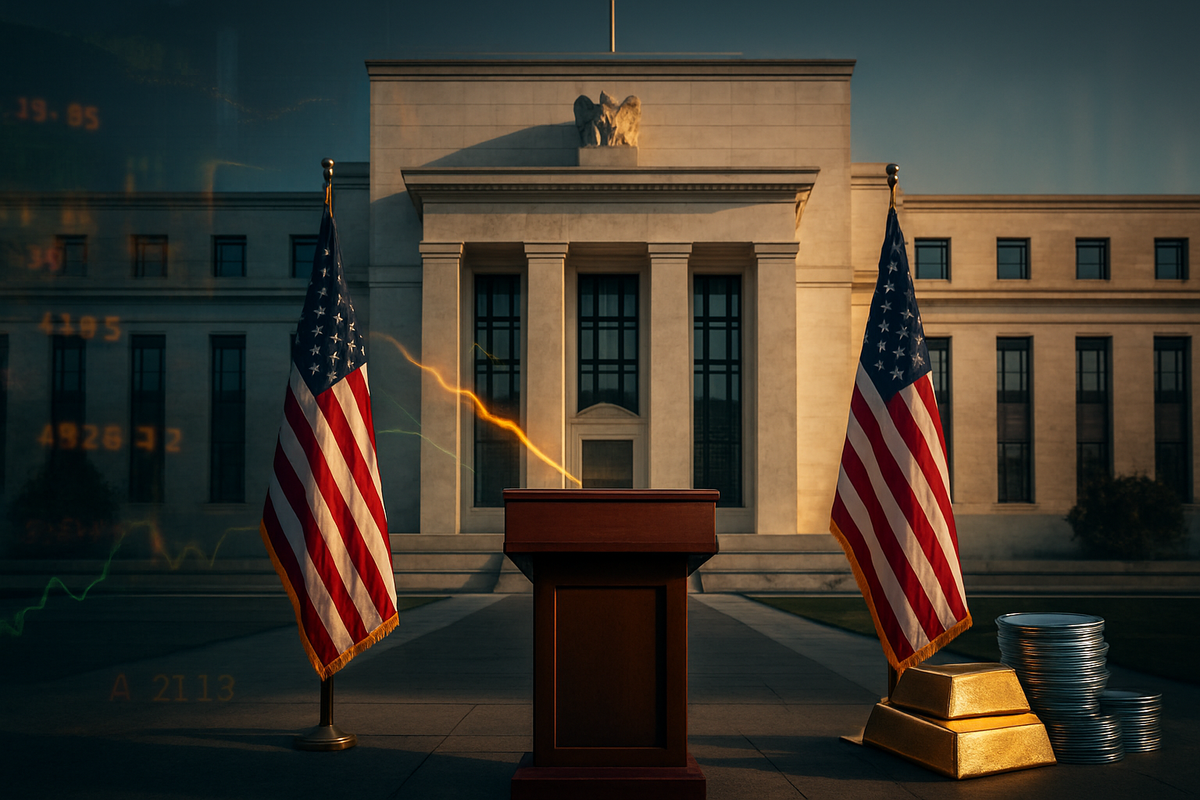
In a move that signals a seismic shift in American monetary policy, President Donald Trump officially announced on January 30, 2026, his intention to nominate Kevin Warsh to succeed Jerome Powell as Chairman of the Federal Reserve. The announcement, which came just months before Powell’s term is set to expire in May 2026, marks the end of a long search for a "market-savvy" leader who can align the central bank's objectives with the administration's pro-growth, deregulation-heavy agenda. Warsh, a former Fed Governor and Wall Street veteran, is expected to usher in a new era of "regime change" at the Eccles Building, focusing on a leaner balance sheet and a more aggressive stance on productivity.
The immediate implications of the nomination have reverberated through global markets, triggering a sharp "twist" in the Treasury curve and a dramatic correction in the commodities sector. While the nomination fulfills President Trump’s desire for a Fed Chair who he believes understands the "art of the deal" and the necessity of lower interest rates, it also introduces significant uncertainty regarding the Federal Reserve’s future independence and its approach to managing the nation's $6.5 trillion balance sheet. As the confirmation process begins in a divided Senate, investors are bracing for a transition that could redefine the relationship between the White House and the world’s most powerful financial institution.
The Nomination and Immediate Market Impact
The road to Warsh’s nomination was a high-stakes process orchestrated by Treasury Secretary Scott Bessent, who reportedly narrowed the field to include titans of industry like Apollo Global Management CEO Marc Rowan before settling on Warsh. President Trump, who had frequently used his Truth Social platform to criticize Jerome Powell for being "too late" to lower rates, described Warsh as "central casting" for the role. The nomination follows a tense period where the administration pushed for a more "predictable" Fed that would support the economic gains driven by artificial intelligence and sweeping deregulation.
The timeline leading up to this moment has been fraught with political friction. In the weeks preceding the announcement, Republican Senator Thom Tillis and other key lawmakers signaled potential hurdles, suggesting that the nomination might be stalled until a Department of Justice investigation into internal Fed operations and building renovations under Powell is resolved. Despite these headwinds, the White House has moved forward, betting on Warsh’s deep institutional knowledge—having served as the youngest-ever Fed Governor during the 2008 financial crisis—to navigate the Senate Banking Committee.
Market reactions were swift and multifaceted. On the day of the announcement, the S&P 500 slipped 0.2%, while the Nasdaq composite fell 0.3%, as traders struggled to price in the possibility of less "forward guidance" and more volatile policy shifts. However, the most explosive reaction occurred in the bond and metals markets. Treasury yields for shorter-term notes drifted lower, reflecting a belief that Warsh might follow Trump’s lead on rate cuts, while longer-dated yields rose as investors anticipated that a smaller Fed balance sheet would mean less central bank intervention to suppress term premiums.
Winners and Losers in the Corporate Sector
The prospect of a "Warsh Fed" has created a clear divide between potential winners and losers in the equity markets. Among the hardest hit were the major players in the precious metals sector. The announcement triggered a massive sell-off in gold and silver, with silver futures plummeting over 30% in a single day. This resulted in significant losses for mining giants like Newmont (NYSE: NEM), which saw its shares drop 8%, and Freeport-McMoRan (NYSE: FCX), which fell 5.9%. These companies, often viewed as hedges against inflation and dollar devaluation, suffered as the market bet on Warsh’s reputation for fiscal discipline and a stronger, more credible dollar.
Conversely, the large-cap banking sector faces a more complex outlook. While firms like JPMorgan Chase (NYSE: JPM) and Warsh’s former employer, Morgan Stanley (NYSE: MS), generally welcomed the appointment of a "market-literate" chairman, they are also preparing for the end of the "ample reserves" regime. Warsh’s stated goal of shrinking the Fed’s balance sheet could lead to a "scarce reserves" environment, potentially increasing volatility in short-term funding markets and making liquidity management more expensive for institutions like Goldman Sachs (NYSE: GS).
Technology firms, particularly those in the AI space, may emerge as winners under the "Warsh doctrine." Warsh has frequently argued that the U.S. is undergoing a structural increase in productivity due to technological innovation. This narrative suggests that the economy can grow faster without triggering inflation, providing a theoretical justification for the lower interest rates that tech companies favor. However, the benefits of lower rates may be offset if the "scarcity" of reserves leads to tighter credit conditions for smaller, growth-dependent firms that rely on regional banks for financing.
Policy Implications and Historical Context
The broader significance of Kevin Warsh’s nomination lies in his proposed "smaller balance sheet / lower rates" framework. This would be a significant departure from the post-2008 era of quantitative easing and massive liquidity injections. By advocating for a reduction in the Fed's holdings while simultaneously looking for opportunities to cut rates, Warsh is attempting to thread a needle that prioritizes market efficiency over central bank intervention. This fits into a broader industry trend of moving away from the "Fed Put"—the idea that the central bank will always step in to save markets—and toward a more data-driven, less communicative style of governance.
The ripple effects will likely be felt most acutely in the relationship between the Fed and the Treasury Department. With Scott Bessent at the helm of the Treasury, a Warsh-led Fed is expected to coordinate more closely on debt management. While this could lead to a more synchronized fiscal and monetary policy, critics warn of "fiscal dominance," a historical precedent where the central bank loses its independence and becomes a tool for funding government deficits. Comparisons are already being drawn to the pre-Volcker era, though Warsh’s "hawk" credentials suggest he would resist outright inflationary policies.
From a regulatory standpoint, Warsh is expected to be a deregulatory force. His background at the Hoover Institution and his public comments suggest a preference for a more hands-off approach to bank supervision. This could lead to a rollback of some of the stricter capital requirements imposed during the Powell era, a move that would be celebrated by the Consumer Bankers Association and other industry groups, but could raise concerns among financial stability advocates who fear a return to the pre-2008 regulatory environment.
The Road to Confirmation and Beyond
As we look toward the May 2026 transition, the short-term focus will be on the Senate confirmation hearings. Warsh will likely face intense questioning from both sides of the aisle regarding his commitment to the Fed’s dual mandate of maximum employment and price stability. If confirmed, his first major task will be managing the "lame-duck" period of Jerome Powell. There is a risk of policy paralysis or, conversely, a sudden pivot if Powell decides to accelerate his own agenda before his exit.
Strategic pivots will be required for institutional investors who have grown accustomed to the Fed's "forward guidance." Warsh has expressed a distaste for telling the markets exactly what the Fed will do months in advance, preferring to let the data speak for itself. This could mean a return to an era of higher intra-day volatility and a premium on active management. Market participants will need to adapt to a world where the Federal Reserve is no longer the primary buyer of last resort in the Treasury market, creating opportunities for private capital to play a larger role in price discovery.
Conclusion: A New Chapter for the Central Bank
The nomination of Kevin Warsh represents one of the most consequential moments for the U.S. economy in a generation. It is a bet that a younger, more market-aligned leader can manage the transition to a post-inflationary world while supporting the administration's aggressive growth targets. The key takeaways for investors are clear: the era of massive Fed balance sheets is likely coming to an end, and the "productivity narrative" driven by AI will be the primary justification for any future rate cuts.
Moving forward, the market will be characterized by a "wait and see" approach as the confirmation process unfolds. Investors should watch for signs of Senate friction, particularly from the more moderate wing of the Republican party, as well as any signals from the current Fed board regarding the transition. The lasting impact of this change will be measured by whether Warsh can maintain the Fed’s credibility while also satisfying a White House that demands both lower rates and a smaller government footprint. In the coming months, the focus will remain squarely on the bond market, as it continues to repriced the "term premium" in anticipation of a very different kind of Fed Chair.
This content is intended for informational purposes only and is not financial advice




Quotes delayed at least 20 minutes.
By accessing this page, you agree to the Privacy Policy and Terms Of Service.