




Financial News
Nvidia Regains Its Crown: 3% Surge Signals End of AI Volatility and Spark Infrastructure Fever
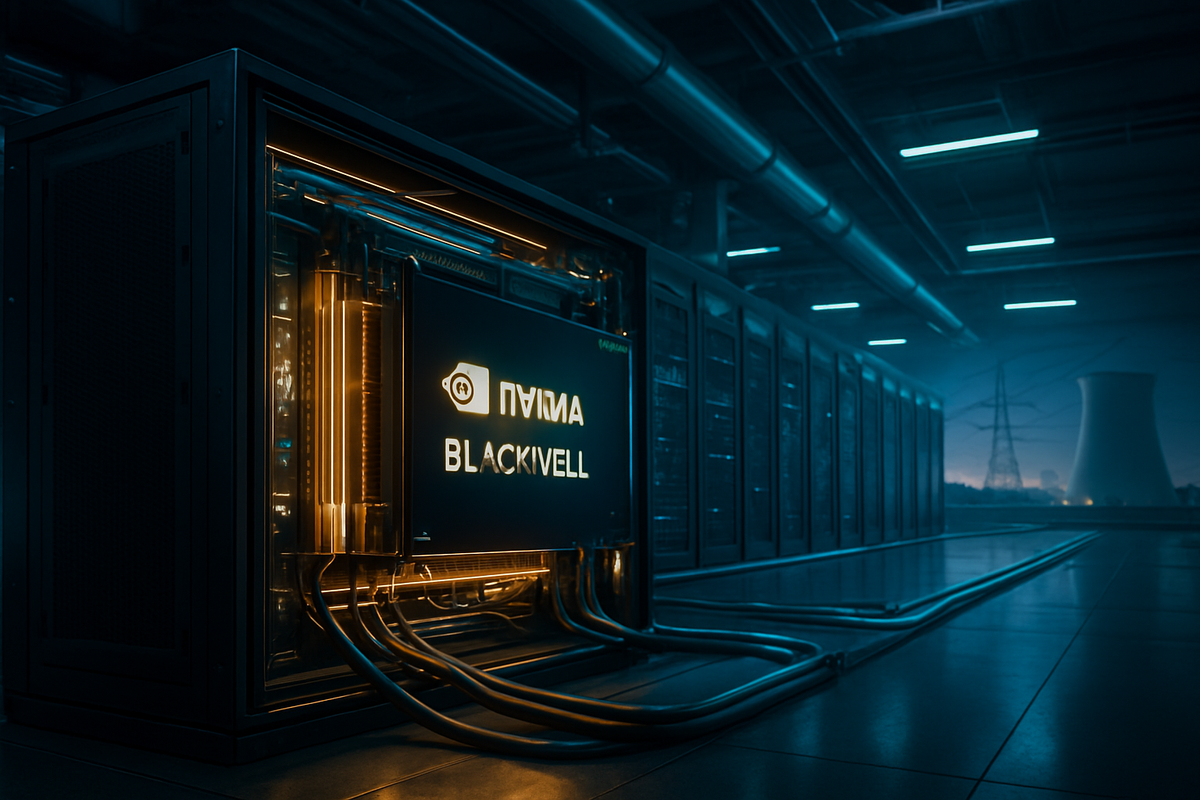
Looking back from today, February 2, 2026, the market movements of a year ago highlight a critical turning point in the artificial intelligence revolution. On February 10, 2025, NVIDIA Corporation (NASDAQ: NVDA) shares surged nearly 3%, closing in the $133 range and effectively ending a period of intense market anxiety known as the "DeepSeek Rout." This rally was more than just a recovery for a single stock; it served as a clarion call for the entire AI ecosystem, igniting a massive wave of investment into the "physical layer" of AI—specifically power utilities and thermal management infrastructure.
The gain on February 10 solidified Nvidia’s position as the indispensable cornerstone of the global AI build-out. While skeptics in early 2025 had briefly questioned whether new, more efficient AI models would diminish the need for massive hardware clusters, the market's decisive move upward signaled a renewed consensus: the demand for compute, and the energy required to sustain it, was only just beginning its exponential climb.
The Great Recovery: How Nvidia Defied the Efficiency Narrative
The rally on February 10, 2025, was a sophisticated technical and psychological breakout for the market. Just weeks earlier, on January 27, the AI sector had been rocked by a record-breaking 17% single-day crash triggered by the release of DeepSeek’s R1 model. At the time, investors feared that "software efficiency" would allow developers to do more with less hardware, potentially eroding Nvidia's massive order book. However, by the second week of February, that narrative had flipped. Analysts argued that even highly efficient models would be deployed at such a massive scale that the total demand for Nvidia’s upcoming Blackwell chips would actually increase, not decrease.
On that Monday, February 10, NVDA shares broke through a key descending resistance level that had capped the stock since the January highs. The catalyst was a mixture of "buy the dip" institutional inflows and growing excitement surrounding the volume production of the Blackwell GB200 systems. Leading up to this moment, Nvidia had quietly reassured its largest "hyperscaler" clients—Microsoft, Amazon, and Google—that shipping timelines remained on track. As the stock climbed towards $134, it dragged the broader S&P 500 and Nasdaq Composite higher, reminding investors that Nvidia remained the primary engine of index growth.
The stakeholders involved in this pivotal day extended far beyond the walls of Silicon Valley. Institutional desks at Goldman Sachs and Morgan Stanley were notably active, shifting capital from speculative software "wrapper" companies back into the "hard tech" of semiconductors and infrastructure. The market’s reaction was one of immense relief; the "DeepSeek hysteria" had been neutralized, and the focus shifted back to the physical bottlenecks of the AI era: electricity and heat.
The Infrastructure Winners: Liquid Cooling and Nuclear Ambitions
As Nvidia led the charge, the rally quickly spread to the companies responsible for housing and powering the AI revolution. Vertiv Holdings Co (NYSE: VRT) emerged as one of the day’s biggest winners. With Nvidia’s Blackwell chips requiring unprecedented levels of liquid cooling, Vertiv was increasingly viewed as a "mandatory" partner for any modern data center. In anticipation of its earnings report the following day, Vertiv’s stock surged as investors realized that the Blackwell transition was essentially a guaranteed revenue stream for thermal management providers.
In the energy sector, the narrative shifted from "traditional utilities" to "growth utilities." Vistra Corp. (NYSE: VST) and Constellation Energy Corporation (NASDAQ: CEG) saw significant gains as the market priced in the scarcity of 24/7 carbon-free power. Vistra, with its massive nuclear portfolio, became a prime target for "behind-the-meter" power deals with tech giants who were desperate to secure energy for their "AI factories." On February 10, the market acknowledged that the limiting factor for AI growth wasn't the chips themselves, but the ability of the power grid to support them.
Meanwhile, Eaton Corporation (NYSE: ETN) acted as the industrial backbone of the rally. As a provider of electrical switchgear and power distribution units, Eaton’s record-high order backlogs were seen as a leading indicator of data center construction. While software companies faced questions about monetization, Eaton and its peers provided a "safe" harbor for investors, offering tangible proof of the multi-year physical build-out phase that was currently underway.
A Structural Shift in the AI Investment Playbook
The events of February 10, 2025, represented a significant evolution in the broader industry trend. It marked the moment the market moved past the "chip-only" phase of AI investing and entered the "stack-wide" phase. This shift was driven by the realization that Nvidia’s Blackwell architecture was not just a chip, but a massive, integrated rack system that fundamentally changed the requirements of a data center. The ripple effects were felt by competitors like Advanced Micro Devices (NASDAQ: AMD), who found themselves forced to compete not just on FLOPS (floating-point operations per second), but on the power efficiency of their total systems.
Historically, this event drew comparisons to the early days of the build-out of the electrical grid or the fiber-optic boom of the late 1990s. However, unlike the dot-com bubble, the 2025 infrastructure rally was backed by the massive, committed capital expenditures of the world’s wealthiest corporations. Regulatory implications also began to surface, as local governments started to grapple with the immense power and water demands of these new facilities. The February rally signaled to policymakers that AI infrastructure was now a critical national interest, leading to a wave of new initiatives to modernize the aging U.S. power grid.
Looking Ahead: The Road to 2026 and Beyond
In the short term following the February 10 surge, the market prepared for a "super-cycle" in data center construction. The strategic pivot for many companies involved securing long-term supply chains for copper, specialized cooling liquids, and nuclear fuel. As we now know in 2026, those who invested in the "bottleneck" plays of early 2025 saw some of the most consistent returns of the year, as power constraints became an even more pressing issue than many had initially predicted.
The long-term scenario that emerged from this period was the rise of the "Sovereign AI" movement, where nations began building their own domestic infrastructure to ensure they weren't entirely dependent on U.S. hyperscalers. This created a secondary wave of demand for Nvidia and its infrastructure partners, extending the "build phase" well beyond the initial 2024-2025 window. The challenges that emerged were primarily environmental and regulatory, as the sheer scale of the energy consumption invited new levels of scrutiny from global carbon-reduction advocates.
Wrap-Up: The Lasting Legacy of the Blackwell Transition
The February 10, 2025, rally was a defining moment that separated the "AI hype" from the "AI reality." It proved that Nvidia’s influence on the market was not just a result of speculative fervor, but a reflection of its role as the gatekeeper of a new industrial era. The stock’s 3% gain that day was the spark that lit a fire under the infrastructure and power sectors, sectors that have since become the new darlings of the tech-heavy indices.
As we move through 2026, the key takeaway for investors is the importance of identifying the "physical limits" of a technology's growth. The rally of a year ago taught us that the most valuable companies are often the ones solving the most difficult physical problems—whether that is cooling a 1,200-watt chip or providing the carbon-free gigawatts needed to train the next generation of artificial general intelligence. Moving forward, the market will continue to watch for the next bottleneck, but for now, the infrastructure foundations laid in early 2025 remain the bedrock of the AI economy.
This content is intended for informational purposes only and is not financial advice.


Quotes delayed at least 20 minutes.
By accessing this page, you agree to the Privacy Policy and Terms Of Service.