




Financial News
Robert Kovacs (NorthernIndex.com) | Why Memory and Storage Companies Could Be the Next Big AI Winners
For the past few years, the artificial intelligence investment story has been dominated by one name: Nvidia.
That makes sense. Nvidia's graphics processors have become one of the most important pieces of infrastructure behind the AI boom, and companies around the world are spending hundreds of billions of dollars building data centres capable of training and running increasingly powerful AI models.
But there is another part of the AI infrastructure story that investors may be paying too little attention to.
Memory.
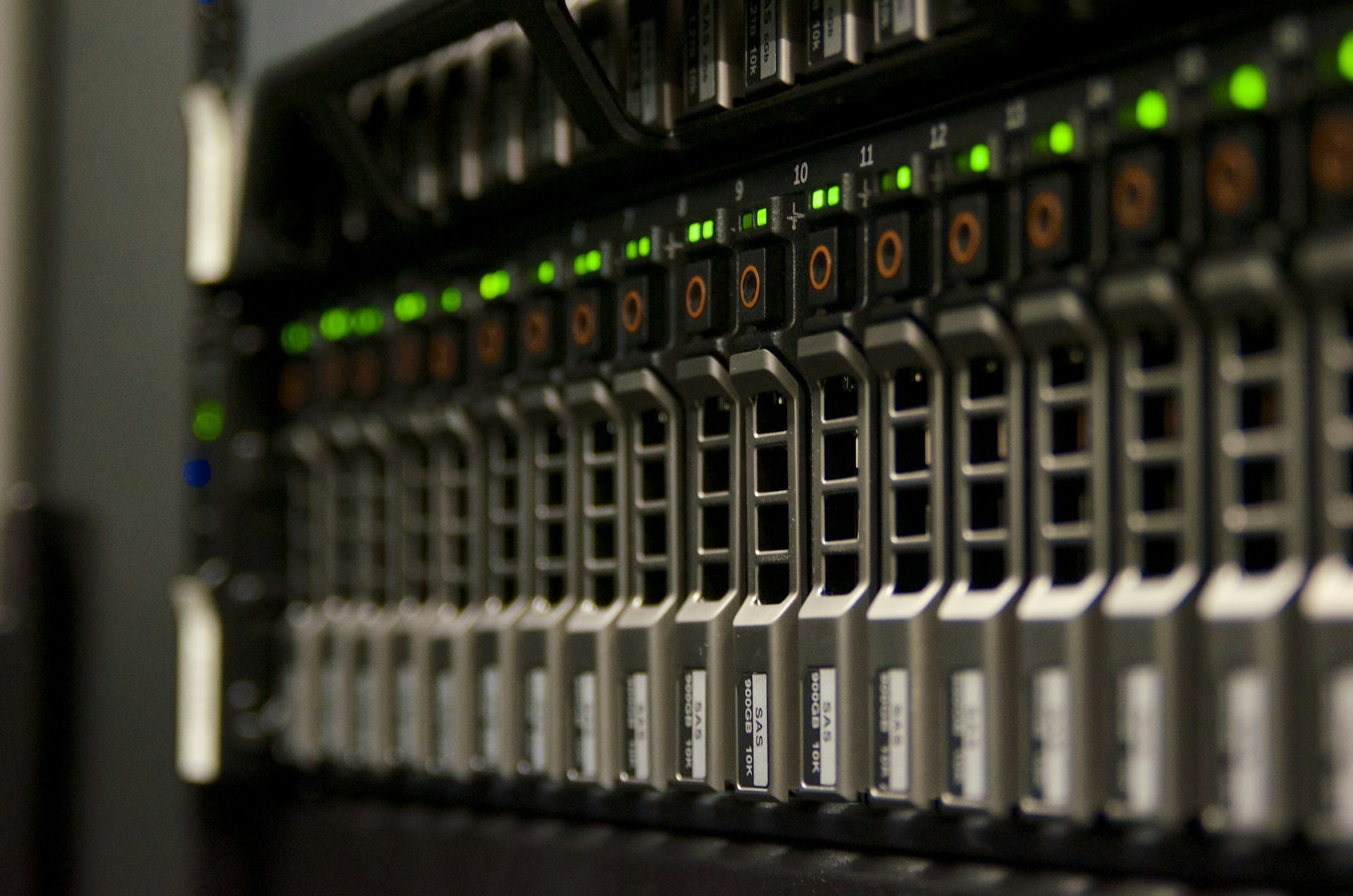
As AI models become larger and more complex, the industry needs much more than powerful processors. Those processors need to access huge amounts of data, and they need to do it extremely quickly. That is creating a rapidly growing market for high-bandwidth memory, advanced DRAM and high-performance storage.
For investors, this raises an interesting question: could some of the biggest beneficiaries of the next stage of the AI boom be the companies supplying the memory and storage that sit underneath the better-known AI companies?
Robert Kovacs, a senior market analyst at NorthernIndex.com with a focus on the UK market, believes the memory industry deserves much more attention as the AI investment cycle develops.
"The AI story is no longer just about who makes the fastest processor," Kovacs says. "The amount of memory and storage required to keep those processors working efficiently is becoming just as important."
AI needs more than powerful chips
It is easy to think of AI as a simple race to build faster processors.
A company develops a more powerful GPU. Data centres buy the GPUs. The GPUs run increasingly advanced AI models.
In reality, the system is much more complicated.
A modern AI data centre needs processors, networking equipment, electricity, cooling systems, memory and storage. Each part has to keep pace with the others.
A powerful processor is of limited use if it cannot receive data quickly enough.
This is where high-bandwidth memory, or HBM, becomes important.
HBM is designed to provide extremely high memory bandwidth while sitting very close to the processor. That makes it particularly useful for AI accelerators, which need to move enormous quantities of data quickly.
The growth of AI has therefore created a new bottleneck.
The industry is not simply asking:
"How powerful can we make the processor?"
It is increasingly asking:
"How quickly can we feed that processor with the data it needs?"
That change could have major consequences for the companies that manufacture memory.
Micron is a company investors should be watching
One of the clearest examples is Micron Technology.
Micron is one of the world's major memory semiconductor manufacturers, with exposure to DRAM, NAND and HBM.
The company's recent financial performance shows just how powerful the AI-driven memory cycle has become.
Micron reported record fiscal 2026 revenue of more than $133 billion, compared with roughly $37 billion the previous year. The company also reported more than $84 billion in GAAP net income for the year.
Those numbers illustrate something important about the AI infrastructure boom.
The economic benefits are not stopping at the companies building AI models.
They are spreading down the supply chain.
Micron has also been investing heavily in HBM production as demand from AI data centres increases. Its latest-generation HBM products are designed for the increasingly demanding requirements of AI accelerators.
That puts Micron in an interesting position.
If AI infrastructure spending continues to grow, demand for advanced memory can grow alongside it.
And unlike some AI businesses that are still trying to work out how to turn enormous user growth into sustainable profits, memory manufacturers are selling physical components that are already required by the infrastructure being built today.
That does not make Micron risk-free.
The memory industry has historically been highly cyclical. Supply increases can eventually push prices lower, while periods of excess demand can produce enormous increases in profitability.
Investors therefore need to distinguish between a structural increase in AI-related demand and the short-term memory cycle.
But the structural story is becoming difficult to ignore.
SanDisk shows why storage matters too
Memory is not limited to HBM.
Another important part of the story is storage.
AI models need access to enormous datasets. As AI systems become more capable, they are also handling larger amounts of information and increasingly long context windows.
That means data centres need more high-performance storage, particularly enterprise solid-state drives.
This is where SanDisk becomes interesting.
SanDisk has traditionally been associated with consumer storage products, but the company's data-centre business has become an increasingly important part of its growth story.
In fiscal 2026, SanDisk reported revenue of more than $20 billion, up sharply from the previous year. Its data-centre revenue increased particularly strongly, demonstrating the growing importance of AI infrastructure to the storage market.
This is an important distinction for investors.
AI does not only require more computing power.
It requires somewhere to put all the data.
It requires somewhere to store models.
It requires fast access to information.
And as AI systems become more sophisticated, the movement of data between storage, memory and processors becomes an increasingly important part of overall performance.
In other words, the AI boom is creating demand at several layers of the memory and storage market.
The AI investment story is becoming broader
For years, investors could largely think about the AI trade through a handful of major technology companies.
Nvidia was the obvious example.
But the investment opportunity is becoming broader as the AI infrastructure stack expands.
Think of the AI ecosystem as a chain:
AI applications → AI models → processors → high-bandwidth memory → conventional memory → storage
Every link matters.
If demand for AI processors increases, demand for the memory required to support those processors can increase.
If AI models require more data, storage requirements increase.
If AI data centres expand, they need more servers, memory and storage.
That is why companies such as Micron and SanDisk deserve more attention from investors.
They are not trying to build the next ChatGPT.
They are supplying some of the physical infrastructure that allows the AI industry to function.
The memory market could be entering a new phase
There is another reason this story is particularly interesting.
AI may be changing the traditional economics of the memory industry.
Historically, memory manufacturers have dealt with a familiar cycle.
Demand rises.
Manufacturers increase production.
Supply catches up.
Prices fall.
Profits decline.
Eventually, investment slows and the cycle starts again.
AI could make the demand side of this equation more complicated.
High-bandwidth memory is more specialised than traditional memory. It also requires advanced manufacturing and packaging technology.
That makes it harder to simply flood the market with supply overnight.
At the same time, major technology companies are signing long-term agreements and investing heavily in AI infrastructure.
This creates the possibility of a more sustained period of strong demand.
SK Hynix, another major memory manufacturer, has already described the current environment as a memory supercycle driven by AI infrastructure. The company has also reported record results as demand for HBM, AI server DRAM and enterprise SSDs has increased.
The important point for investors is not whether the word "supercycle" eventually proves correct.
It is that AI is changing the amount and type of memory required by modern computing.
That is a much bigger development than a normal upgrade cycle.
Nvidia may actually help the memory companies
It may seem strange to discuss Micron and SanDisk alongside Nvidia as if they are part of the same investment story.
But they are.
Nvidia's success is one of the reasons demand for advanced memory is increasing.
The more AI accelerators that are deployed, the more memory is needed to support them.
That creates an interesting relationship.
An investor does not necessarily have to choose between the AI chip story and the memory story.
The growth of one can support the other.
This is also why the memory industry deserves attention even if the long-term winners among AI software companies remain uncertain.
Nobody knows exactly which AI application will become dominant five or ten years from now.
But regardless of which applications win, those systems will still need computing power, memory and storage.
That makes the underlying infrastructure an interesting area for investors to study.
But investors should not confuse a strong industry with a guaranteed stock market winner
There is an important warning here.
A great industry does not automatically make every company in that industry a great investment.
Memory stocks can be extremely volatile.
They are exposed to semiconductor cycles, changes in supply, pricing pressure, capital expenditure requirements and competition.
A company can experience huge growth in demand and still see its share price fall if investors have already priced in even greater growth.
That is why valuation remains important.
Investors should also watch how quickly memory manufacturers are adding capacity.
If supply eventually grows faster than demand, pricing could weaken.
The same is true if AI infrastructure spending slows.
The current AI memory boom should therefore not be viewed as a one-way bet.
Instead, investors should look at the underlying demand, supply conditions, technological advantages and financial strength of each company.
The bigger opportunity may be hiding underneath the AI headlines
For Robert Kovacs, the most interesting part of the AI story is not necessarily finding the next company that creates the most popular AI application.
It is understanding which businesses are supplying the infrastructure that the entire industry needs.
"The market tends to focus on the most visible names," Kovacs says. "But some of the most important businesses are further down the supply chain. Memory is a good example because every improvement in AI computing creates new demands for faster and larger memory systems."
That could become increasingly important as AI moves from today's large language models toward systems capable of handling more complex tasks and operating continuously.
The amount of information these systems need to process is unlikely to get smaller.
If anything, it is likely to increase.
And that means the memory and storage layer of the AI ecosystem could become one of the most important areas for investors to watch.
What UK investors should watch next
For investors following the AI sector, there are several developments worth watching over the coming years.
First, watch the growth of HBM.
If AI accelerators continue to require increasingly sophisticated memory, companies with strong HBM technology and manufacturing capacity could remain strategically important.
Second, watch enterprise SSD demand.
As AI models process larger datasets, storage performance becomes increasingly important. Strong growth in data-centre storage could create another major source of demand for NAND manufacturers.
Third, watch memory pricing.
Strong demand is only part of the equation. Investors should pay attention to whether supply is keeping pace and what that means for average selling prices and profit margins.
Finally, watch capital expenditure from the major technology companies.
The AI infrastructure cycle ultimately depends on companies continuing to spend enormous amounts on data centres and computing capacity.
If that spending continues, the companies supplying the infrastructure should remain important beneficiaries.
The AI trade may be bigger than Nvidia
The AI revolution is often presented as a race between technology companies trying to build the most powerful models and processors.
But underneath that race is a much larger industrial ecosystem.
AI needs electricity.
It needs data centres.
It needs networking.
It needs processors.
And increasingly, it needs enormous amounts of high-performance memory and storage.
That creates an opportunity for investors willing to look beyond the most obvious names.
Nvidia may remain one of the most important companies in the AI industry. But companies such as Micron, SanDisk and SK Hynix show that the AI opportunity extends much further down the supply chain.
For investors, that may be one of the most important lessons of the current AI cycle.
The winners of the AI revolution may not all be the companies building the intelligence.
Some may be the companies providing the memory that allows that intelligence to work.
About the Author
Robert Kovacs is a senior market analyst at NorthernIndex.com, where he focuses on global financial markets, technology and emerging investment trends. His research looks beyond short-term market movements to identify the companies, industries and broader economic forces shaping the next stage of market growth.
With a particular focus on developments relevant to UK investors, Robert provides market analysis designed to help readers better understand both the opportunities and risks emerging across global markets.
If you believe this article contains misleading, harmful, or spam content, please let us know.
Report this articleMore News
View More



Recent Quotes
View MoreQuotes delayed at least 20 minutes.
By accessing this page, you agree to the Privacy Policy and Terms Of Service.