



Financial News
Torque Sensor vs. Cadence Sensor: Which Is Better for You?
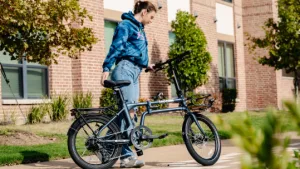
Two electric bikes for adults may have the same motors and batteries but give very different impressions when you’re pedalling. One provides assistance smoothly as you press down harder. The other only gives help when you begin to turn the pedals, even if you’re only making a small effort.
That difference is usually due to the pedal-assist sensor.
When comparing torque sensors with cadence sensors, torque sensors usually provide a more natural and responsive way of riding, whereas cadence sensors make it simpler to get motor assistance without having to pedal hard. Neither of the two is inherently superior, the choice coming down to how much control, physical effort, and assistance you want from your e-bike.
What Is the Difference Between a Torque Sensor and a Cadence Sensor?
A torque sensor tells you how much force is applied to the pedals, while a cadence sensor shows how fast the pedals are rotating. Although both of these send their information to the motor controller they determine when and how much assistance to give by using different inputs.
| Feature | Torque Sensor | Cadence Sensor |
| What It Measures | Pedaling force | Pedal rotation or speed |
| Motor Response | Adjusts assistance according to effort | Activates assistance based on pedaling and controller settings |
| Riding Feel | Progressive and bicycle-like | More consistent, sometimes more noticeable |
| Pedaling Effort | More effort generally produces more assistance | Assistance may require little pedal pressure |
| Low-Speed Control | Often easier to fine-tune | Depends heavily on response settings |
| Typical Cost | Usually higher | Usually lower |
| Best For | Active riding, precise control, varied terrain | Relaxed cruising, errands, everyday utility |
The key point is not just the speed at which the motor starts, but rather how closely the motor’s output matches the action of your legs. Both systems offer a number of pedal-assist settings, and their behaviour also varies according to how the controller is programmed.
How Does an Electric Bike Torque Sensor Work?
An electric bike’s torque sensor measures the force exerted through the pedals and employs this figure to aid in controlling the level of motor assistance. The more you push, the greater the amount of assistance the system will provide within the chosen power level, while if you ease off, the motor will decrease its level of contribution.
Torque sensors typically make use of strain gauges or other types of measuring technology and can be incorporated into the bottom bracket, the crankset, or another component of the drivetrain, according to the design of the bicycle.
For instance, if you’re going up a small hill you’ll automatically pedal harder. The torque-sensing system picks up on this increased effort and is able to provide more motor assistance without you having to manually choose a higher assistance level.
Why Does a Torque Sensor Feel More Natural?
Torque sensing works in a way that is similar to how people ride ordinary bicycles; when you speed up, climb or slow down, the motor adjusts its contribution according to your level of effort rather than just responding to the movement of the pedals.
It is especially useful in traffic that comes to a stop and then moves again, since it allows for smooth acceleration without having to produce a big burst of power. Additionally, it gives the riders greater control when going through tight corners, on shared paths, or over uneven surfaces.
Torque sensors aren’t always easy to use; you still have to press the pedals in order to get help, and the way in which they respond depends on the bike’s motor, its software, and the assist level that has been chosen.
How Does a Cadence Sensor Work on an E-Bike?
A cadence sensor picks up the rotation of the pedals and signals the controller as to whether or not you are pedalling. On a great many e-bikes that are based on cadence the motor provides assistance in accordance with the pedal-assist level that has been chosen, even if you are exerting only a small amount of force.
Certain systems are able to detect the rotational speed, whereas those with a simpler design mainly detect whether or not the cranks are in motion. The controller then works out how this information should be converted into motor output.
For example, suppose you are riding on a flat street in a residential area. After you begin to pedal, a cadence-sensitive system is able to give constant assistance as long as you don’t have to push much harder. This means that leisurely riding can seem easier, especially if you aren’t interested in working out.
Why Do Some Cadence Sensors Feel Jerky?
The kind of sudden increase in speed that is sometimes linked with cadence sensors is generally due to the way the controller switches on motor power, not because of the detection of pedal rotation.
Some systems demand that you complete part of a crank revolution before they start providing assistance, while others supply a fairly strong amount of power as soon as pedalling is detected. The effect is as if there has been a delay and then an unexpected surge of power.
Today’s controllers are able to lessen this effect by providing smoother power ramping, offering adjustable levels of assistance, and having a more responsive pedal detection system. Although a well-adjusted cadence system can give a smoother riding experience than a poorly tuned torque system, the type of sensor alone does not decide the quality of the ride.
Torque Sensor vs. Cadence Sensor: Which Feels Better in Real Riding?
It’s much easier to understand the differences if you compare actual riding situations with the technical specifications alone.
| Riding Situation | Torque Sensor Experience | Cadence Sensor Experience |
| Starting from a Stop | Assistance builds with pedal pressure | Assistance begins when pedaling is detected |
| Climbing Hills | Responds to increased pedaling effort | Assistance follows the selected level and controller behavior |
| Flat-Road Cruising | Adjusts as effort changes | Can provide steady support with light pedaling |
| Stop-and-Go Traffic | Often offers more precise acceleration control | May require more attention to assist settings |
| Riding for Exercise | Supports effort-based pedaling | Can reduce the effort needed to keep moving |
| Carrying Cargo | Adjusts assistance as pedaling load changes | Provides support without requiring strong pedal pressure |
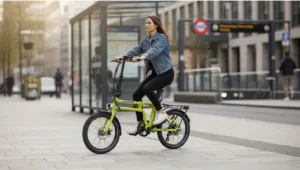
Which Is Better for Hills?
Torque sensors tend to seem more natural when using the vehicle on different types of ground since they react in proportion to the pressure applied to the pedals. It is thus easier to adjust the level of motor assistance in a natural way when the gradient changes.
Cadence sensors are still capable of handling hills efficiently, especially when combined with adequate motor torque and appropriate gearing. The motor will not automatically boost its assistance merely because you pedal harder.
When it comes to hill climbing, the type of sensor is just as important as the motor’s torque, the gearing, and the continuous power; a torque sensor does not mean that a low-powered motor is stronger than a higher-powered cadence-based system.
Which Is Better for City Commuting?
On busy city streets, torque sensing provides more consistent low-speed control when accelerating after coming to a stop at a traffic light or when moving around pedestrians. Minor adjustments in the pressure on the pedal result in corresponding changes in the level of assistance.
Cadence sensing is suitable for commuters who want a steady level of support and who don’t need to exert much physical effort; on routes that are flatter and have fewer interruptions the difference is less obvious, particularly when the bike has responsive controller settings.
Which Is Better for Casual Riding?
Cadence sensors are attractive when cycling in a relaxed manner since it isn’t necessary to pedal hard in order to get the assistance. They are useful for trips around the neighbourhood, running errands, or cycling with a moderate load.
Torque sensors are just as comfortable for casual riding, but they do promote a more active kind of pedalling. When you like to control your speed by using your own effort, the additional responsiveness might be worth having.
Does a Torque Sensor Give You Better Battery Range?
A torque sensor may lead to better energy efficiency in certain riding conditions, but it cannot ensure a longer battery range. The actual energy consumption is determined by the motor output, the speed, the hills, the rider’s weight, the controller programming, and the amount of effort the rider puts in.
A torque-sensing system is able to cut back on the amount of power that is delivered when you are pedalling lightly, while a cadence-based system can keep up a higher level of assistance depending on the setting and the way it is programmed.
Consider a simple example using a 480Wh battery:
| Average Electrical Power Draw | Approximate Riding Time |
| 150W | 3.2 hours |
| 200W | 2.4 hours |
| 300W | 1.6 hours |
The figures given here are based on the assumption that all 480Wh can be used; they are not actual measurements obtained during riding. The amount of energy produced by the battery and the amount consumed by the motor vary during a journey.
The important point to take away is that if you reduce the average power consumption of the motor, your riding time will increase. Although a torque sensor could help you do this by providing assistance based on your level of effort, it’s still your own riding behaviour that matters more than the sensor.
Real E-Bike Examples: Leoguar Flippo vs. Sprint
The distinction between the two types of sensor is more apparent when one looks at electric bikes that are designed for various everyday requirements.
The compact Flippo folding e-bike and the Sprint utility e-bike from Leoguar both have rear hub motors, but the pedal-assist systems on them produce different riding experiences because one of the bikes uses torque sensing and the other uses cadence sensing.
Leoguar Flippo: Torque Sensing for Everyday City Rides
The folding electric bike made by Leoguar Flippo is equipped with a bottom-bracket torque sensor which adjusts the level of motor assistance according to the amount of pedalling effort.
The rear hub motor, which has a rated power of 350W, can produce up to 45Nm of torque, and there are five levels of pedal assistance so that riders can select the amount of support they need. The 480Wh removable battery, located in the seatpost, gives a claimed range of up to 45 miles.
For commuters who have to stop frequently, the torque sensor provides a practical advantage in that the level of assistance varies with the pressure on the pedals. Moreover, the bike’s compact folding structure makes it suitable for people who need to keep it in an apartment, an office, or a vehicle.
Leoguar Sprint: Cadence Sensing for Relaxed Utility Riding
The Leoguar Utility Ebike is fitted with a cadence sensor, has five settings for pedal assistance, is equipped with a 350W rated rear hub motor, and includes a half-twist throttle.
The system, which is based on cadence, gives help as soon as pedalling is detected, without needing the rider to exert a great deal of pressure on the pedals. This means that it is suitable for riding in a neighbourhood, for commuting, and for carrying out ordinary errands.
The bike also has a 3-in-1 rear mount for compatible cargo and passenger accessories, provided that the stated load limits are not exceeded. The 614Wh removable battery gives an advertised range of up to 55 miles.
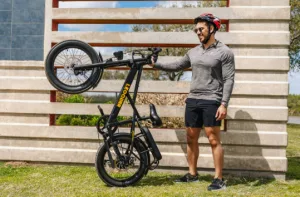
Flippo vs. Sprint: Key Specifications
| Feature | Flippo Folding Ebike | Sprint Utility Ebike |
| Sensor | Torque | Cadence |
| Riding Feel | Effort-responsive assistance | Steady assistance with light pedaling |
| Motor | 350W rated | 350W rated |
| Battery | 480Wh | 614Wh |
| Advertised Range | Up to 45 miles | Up to 55 miles |
| Pedal Assist | 5 levels | 5 levels |
| Main Design | Compact folding frame | Utility frame with 3-in-1 rear mount |
| Best Suited For | City commuters, compact storage, active pedaling | Everyday errands, relaxed riding, carrying gear |
These examples show how the selection of sensors relates to the overall design of a bike; the Flippo focuses on compact storage and assistance that responds to the rider’s effort, whereas the Sprint stresses versatility as a means of transportation and easy pedalling.
One should not use the advertised ranges as proof that one type of sensor is more efficient since the bikes have different battery capacities, tire types, configurations, and intended riding conditions.
How to Choose Between a Torque and Cadence Sensor
Before you buy it, consider how you want the motor to behave when you’re riding normally.
If you like pedalling, want a level of assistance that matches the amount of effort you put in, or often ride on terrain that varies and involves stopping and starting, then a torque sensor is usually the better choice.
If you prefer relaxed cruising, are looking for steady assistance without having to pedal hard, or want a practical e-bike at a more accessible price, then a cadence sensor might be the better choice for you.
What Should You Check During a Test Ride?
Test both systems under the same conditions, ideally using similar assist settings.
- Begin with a full stop and observe how soon help starts as well as whether the acceleration seems predictable.
- Press the pedal gently at first and then more forcefully; make sure that the amount of power produced by the motor matches your pedalling effort or that it remains about the same.
- Go up a slowly sloping hill and observe the amount of shifting or adjustment of the assist level that is required.
- Calm down and cease pedalling; note how quickly the motor assistance stops.
- Alter the level of assistance provided and ensure that the system gives you sufficient control in line with your riding preferences.
If you can, carry out the test on a route that is similar to your usual commute; a sensor that sounds good on an empty parking lot might act differently when there is traffic or on hills.
Final Thoughts: Choose the Ride Feel That Suits You
Torque and cadence sensors are not different measures of quality; rather, they are various methods of controlling pedal assistance.
A torque sensor is similar to cycling on a conventional bicycle with added support, which is why it is attractive to active commuters and riders who prioritize precise control. Because it provides help without requiring a great deal of pedal force, a cadence sensor can make ordinary cycling easier.
The right option will be based on the type of riding experience you prefer rather than just on which technology seems more advanced.
Frequently Asked Questions
- Is a torque sensor superior to a cadence sensor on an e-bike?
For riders who want a smooth and natural kind of assistance that matches their level of pedalling, a torque sensor is usually the better choice. For those who prefer steady motor support and need to exert less physical effort, a cadence sensor is more suitable. However, neither option is superior in all cases since the experience also depends on the controller’s settings, the motor’s performance, and the conditions under which riding takes place.
- Will a torque sensor increase the speed of an electric bike?
Not at all. A torque sensor regulates the way that the motor assistance responds to the force of pedaling; it does not cause the motor’s maximum speed or power rating to increase automatically. The highest assisted speed that an e-bike can reach depends on the motor it has, the settings of the controller, and the relevant speed restrictions rather than just the type of sensor.
- Do e-bikes with a torque sensor perform better when climbing hills?
Torque sensors can make hill climbing feel more intuitive because assistance responds when you push harder. However, actual climbing performance depends on motor torque, available power, gearing, terrain, and rider weight. A properly designed cadence-based e-bike can also perform well on hills.
- Does a cadence sensor use more battery than a torque sensor?
Not necessarily. Some cadence-based systems maintain relatively high motor output when pedaling lightly, which can increase energy use. However, efficiency depends on assistance settings, controller programming, speed, and rider effort. Comparing battery range requires testing similar bikes under the same conditions.
- Can you replace a cadence sensor with a torque sensor?
Sometimes, but it is not always a simple upgrade. The controller must support torque-sensor input, and the sensor must fit the bike’s crank or bottom-bracket system. Wiring, software settings, and display compatibility may also differ. Check with the manufacturer before purchasing replacement components.
If you believe this article contains misleading, harmful, or spam content, please let us know.
Report this articleMore News
View More




Recent Quotes
View MoreQuotes delayed at least 20 minutes.
By accessing this page, you agree to the Privacy Policy and Terms Of Service.