



Financial News
How Digital Tools Make European Train Travel Easier
Travelling across Europe by train has a particular appeal. You can leave one historic city centre in the morning, watch the landscape change through the window, and arrive somewhere entirely different by lunchtime. But while the journey itself can be straightforward, planning it isn’t always as simple as choosing two cities on a map.
Europe’s railway network involves numerous national operators, different ticketing systems and stations with unfamiliar names. A route that looks simple at first might involve a change of trains, a separate reservation or a connection across town. For first-time visitors, keeping track of these details can become surprisingly time-consuming.
Fortunately, digital travel tools have made much of this process easier. From researching routes to storing tickets and checking last-minute changes, a smartphone can help travellers navigate Europe’s railway network with greater confidence.
Plan the Route Before Booking the Ticket
One of the most useful changes in modern travel planning is the ability to research an entire journey before committing to individual tickets.
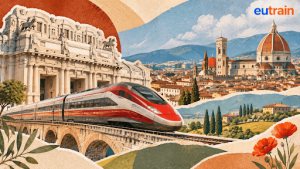
Instead of looking at each train separately, start by mapping out the cities you want to visit and identifying which connections make sense. An itinerary from Milan to Florence and Rome, for example, follows a well-established high-speed railway corridor. Adding a destination that requires several transfers may change how much time you need.
An European train travel guide can provide a useful starting point for understanding railway routes, major stations and the practical differences between travelling in various European countries. Learning how the network works before comparing fares can help you avoid inconvenient connections and unnecessary travel time.
It is also important to recognise that Europe does not operate under one universal railway ticketing system. Germany’s Deutsche Bahn, France’s SNCF, Italy’s Trenitalia and other operators have their own services, fare conditions and booking arrangements.
Even within the same country, competing operators may provide different options. On Italian high-speed routes, for instance, travellers can compare services operated by Trenitalia and Italo.
The cheapest ticket is not automatically the most convenient. Departure stations, transfer times, luggage requirements and ticket flexibility all deserve consideration.
Digital planning tools make these comparisons easier, but travellers should still review the conditions attached to the specific service they choose.
Keep Your Travel Information Organised
Booking tickets is only one part of a successful trip. Once the reservations start arriving, another challenge appears: keeping everything accessible.
Train tickets, accommodation confirmations and attraction reservations often arrive through separate emails or applications. Searching through an overflowing inbox while standing in a crowded station is hardly the ideal way to begin a journey.
A simple digital itinerary can solve much of this problem.
For each travel day, record the departure and arrival stations, train number, departure time and accommodation address. Keep important booking references together, preferably in a clearly labelled folder or travel-planning application.
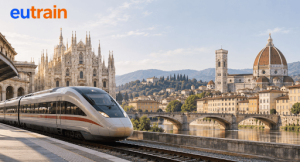
Digital tickets have also made boarding more convenient on many European railway services. Deutsche Bahn, for example, allows passengers to access digital tickets through its DB Navigator app, while Trenitalia provides mobile ticketing options for eligible services.
However, ticket formats and validation requirements vary. A high-speed ticket with an assigned train is not necessarily subject to the same rules as a regional ticket. Travellers should follow the instructions provided by their railway operator rather than assuming every digital ticket works identically.
Another worthwhile precaution is saving essential travel documents for offline access when the operator permits it. Mobile coverage is not guaranteed everywhere, particularly inside tunnels, underground stations or rural areas.
For tickets requiring a live app display, electronic activation or dynamic validation, keep the official application available and follow its instructions.
A portable charger can also be invaluable during long travel days when navigation, photography and mobile ticketing compete for battery life.
Use Digital Tools to Navigate Unfamiliar Stations
European railway stations are often located close to city centres, but that does not mean navigating them is always intuitive.
Large terminals such as Milano Centrale, Roma Termini, Paris Gare du Nord and Berlin Hauptbahnhof handle extensive passenger traffic and connections to local transport. Finding the correct platform or exit can take longer than expected, especially for travellers unfamiliar with the station.
One common planning mistake is searching only for a city name rather than the exact station printed on a ticket. Milan, Paris and London all have multiple major railway terminals, and arriving at the wrong one can create a serious problem when a connection is involved.
This is where combining route information with station-specific guidance becomes especially helpful.
Platforms can change, so digital journey details should always be checked against official station departure boards. Navigation applications are useful for getting to the station, but the railway operator remains the best source for current train assignments and service disruptions.
For travellers organising several journeys across Europe, the euTrain app is another option for exploring routes and accessing train ticket information on a mobile device. Alongside digital railway resources, practical station guides can help travellers understand where their journeys begin and end.
The most effective approach is not necessarily to download as many applications as possible. It is to combine a small number of reliable tools that cover route planning, ticket access, local navigation and official travel updates.
Be Ready When Plans Change
Even a carefully organised railway itinerary can be affected by delays, maintenance work or unexpected disruptions.
Digital services can help travellers respond more quickly. Many railway operators provide journey notifications, current service information and alternative connection details through their websites or mobile applications.
Deutsche Bahn’s DB Navigator, for example, includes journey information and notifications for supported trips. Trenitalia also provides train status information through its digital services.
These tools are especially useful when a journey involves connections. If an earlier train is running late, knowing about the disruption before reaching the interchange station gives you more time to investigate your options.
It is worth understanding your ticket arrangements before travelling. A journey purchased under a single through-ticket may offer different protections from separately booked tickets. EU rail passenger rights establish important protections, but the remedies available depend on the circumstances and applicable rules.
Keep your booking confirmation and check official operator information if a disruption affects your journey. When necessary, contact the operator or ticket seller responsible for the booking.
Digital tools also help with the smaller, everyday adjustments that make travel less stressful. Offline maps can guide you to your accommodation, translation applications can assist with unfamiliar signs, and saved addresses make local transport easier to arrange.
For a multi-city trip, consider leaving a reasonable margin between train arrivals and timed activities. No application can compensate for an itinerary that leaves no room for delays or unexpected changes.
A Smarter Way to Experience Europe by Rail
Technology cannot replace the pleasure of travelling. The appeal of European rail journeys still comes from the landscapes, architecture, local culture and freedom to explore different destinations.
What digital tools can do is remove some of the uncertainty surrounding those experiences.
When travellers understand their routes, know which station to use and can access their travel information quickly, they spend less time solving logistical problems and more time enjoying the journey.
The best digital travel setup is often the simplest: reliable route information, organised tickets, offline essentials and direct access to official service updates.
With those basics in place, exploring Europe by train becomes less about managing complicated arrangements and more about discovering what makes each destination worth visiting.
If you believe this article contains misleading, harmful, or spam content, please let us know.
Report this article



Quotes delayed at least 20 minutes.
By accessing this page, you agree to the Privacy Policy and Terms Of Service.