




Financial News
Boeing’s Credibility Reset: Climbing Out of the 'Deep Hole' with First Profit Since 2018
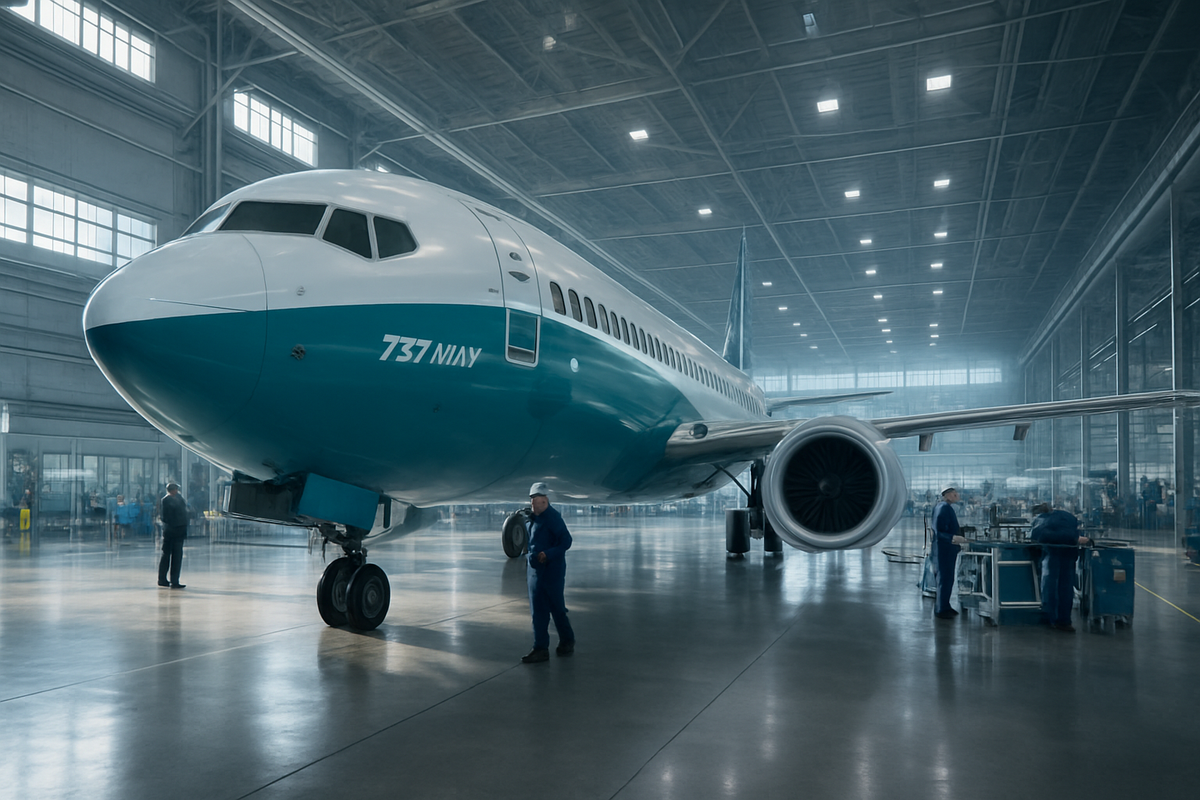
On January 27, 2026, Boeing (NYSE: BA) released its fourth-quarter and full-year 2025 financial results, marking what many analysts are calling a "credibility reset" for the storied aerospace giant. For the first time since 2018, the company reported a positive annual net income, signaling an end to the multi-year spiral of operational failures and financial hemorrhaging that began with the 737 MAX groundings and culminated in the 2024 Alaska Airlines door-plug crisis. While the headline profit of $2.24 billion for the year was heavily assisted by the strategic sale of its Digital Aviation Solutions business, the underlying metrics suggest a company finally finding its footing in its quest to stabilize production.
The immediate implications for the market are significant. After years of delivery delays that forced airlines to radically alter their growth strategies, Boeing’s management, led by CEO Kelly Ortberg, has provided a roadmap for 2026 that prioritizes production stability over aggressive expansion. For investors, the turn to positive free cash flow in the fourth quarter—a "psychological win" of $400 million—offers the first tangible evidence that the company is beginning to generate the capital necessary to pay down its massive debt load and reintegrate its supply chain.
The specifics of the Q4 2025 report paint a picture of a company in the late stages of a brutal recovery phase. Boeing reported quarterly revenue of $23.9 billion, a 57% increase compared to the strike-hobbled final quarter of 2024. The net income for the quarter stood at a staggering $8.22 billion, though management was quick to clarify that this was largely due to a $9.6 billion one-time gain from the divestiture of its Jeppesen unit. Without this sale, the Commercial Airplanes (BCA) division would have still posted a loss of roughly $632 million, illustrating that while production is up, structural profitability has not yet returned.
The timeline leading to this moment has been a grueling 12-month marathon. Following the appointment of Kelly Ortberg in August 2024 and the subsequent resolution of a paralyzing labor strike later that year, Boeing spent much of 2025 under the intense "enhanced oversight" of the FAA. By October 2025, the company had successfully demonstrated enough manufacturing consistency to persuade regulators to raise the production cap on the 737 MAX from 38 to 42 aircraft per month. Key players in this turnaround included the FAA's new Aviation Safety Oversight and Certification Organization, which maintained a permanent presence on Boeing’s shop floors, and the leadership at Spirit AeroSystems, which was officially re-acquired by Boeing in December 2025 for $4.7 billion to bring fuselage quality control back in-house.
Initial market reaction was one of measured relief. While shares of Boeing fell 1.56% to $244.56 on the day of the announcement, the stock remains up over 40% from its 2024 lows. Investors appear to be looking past the accounting gains to the core operational improvements: the stabilization of the 787 Dreamliner at eight units per month and the successful integration of Spirit AeroSystems, which Ortberg described as essential for "direct oversight of fuselage quality."
The primary winners in Boeing’s stabilization are the major domestic carriers that have been "starved" of narrowbody aircraft for years. Southwest Airlines (NYSE: LUV) is a chief beneficiary, expecting 66 Boeing 737-8 deliveries in 2026. This allows the carrier to finally retire its aging 737-700 fleet and lower its fuel expenses. Similarly, United Airlines (Nasdaq: UAL) has re-integrated the MAX 10 into its long-term plans, even as it takes delivery of 20 Boeing 787s this year—its largest widebody intake in decades. The stability in Seattle allows these airlines to plan their 2026-2027 schedules with a level of certainty that has been absent for half a decade.
On the other side of the ledger, Airbus (Euronext: AIR) faces a newly competitive landscape. While the European rival still maintains a superior backlog and higher operational margins, Boeing actually outperformed Airbus in net orders in 2025 (1,173 to 889). Airbus continues to dominate the single-aisle market with the A321neo, but Boeing’s "stop the bleeding" strategy has prevented a total exodus of loyal customers. Suppliers like GE Aerospace (NYSE: GE) also stand to win as production rates climb toward 50 aircraft per month, though they face the challenge of keeping pace with Boeing’s accelerating schedule after years of volatility.
The potential "losers" in this scenario include the smaller tier-two and tier-three suppliers who may struggle with the aggressive ramp-up planned for late 2026. CEO Ortberg’s commentary on "climbing out of a very deep hole" was a direct nod to the fragility of the supply chain. If Boeing attempts to push production to 53 units per month by the end of 2026 as planned, any bottleneck at a minor supplier could trigger another round of delivery delays, potentially souring the hard-won goodwill with airlines and investors.
The broader significance of Boeing’s 2025 performance lies in the shift from a "finance-first" culture to what Ortberg calls a "product-driven" culture. This event marks a potential end to the era of extreme outsourcing that many critics believe led to the quality lapses of the 2010s. By bringing Spirit AeroSystems back into the fold, Boeing is attempting to reverse decades of corporate strategy, a move that could serve as a case study for other manufacturing giants facing quality control crises.
In the context of industry trends, Boeing’s recovery is happening as the global aviation sector shifts its focus toward sustainability and the next generation of narrowbody aircraft. The delays in Boeing’s recovery have allowed the A321neo to capture the lucrative "middle of the market" (MoM), a position Boeing is now trying to claw back with the 737 MAX 10. The regulatory environment has also permanently changed; the FAA’s "on-site monitoring" and individual aircraft inspections are now the new standard, likely increasing the long-term cost of aircraft manufacturing for the entire industry.
Historically, this recovery echoes the post-1970s "Incredible 747" era or the recovery following the 1997 merger-related production collapses. However, the stakes are higher today due to the global duopoly. A failure by Boeing to stabilize would have left the world’s airlines entirely dependent on a single supplier, a scenario that regulators and governments were desperate to avoid. This "too big to fail" dynamic has essentially provided the floor for Boeing’s stock and the political capital for its recovery.
Looking ahead, the short-term focus remains the certification of the 737 MAX 7 (targeted for August 2026) and the progress of the 777X. Despite a new durability issue with the GE9X engines identified in early January 2026, Boeing maintains that the 777X is on track for its first delivery in early 2027. For the remainder of 2026, the company is targeting a "back-half weighted" recovery, aiming for a production rate of 47 MAX aircraft per month by mid-year and 53 by year-end.
The long-term challenge for Boeing is its balance sheet. While free cash flow is projected to be between $1 billion and $3 billion for 2026, the company still carries a massive debt load. Strategic pivots may include a further streamlining of its defense and space business, which has continued to struggle with fixed-price contract losses. If Boeing can reach its goal of 10 Dreamliners per month by late 2026, it will finally have the cash engine needed to begin serious research and development on a "clean sheet" aircraft to replace the aging 737 platform in the 2030s.
In summary, Boeing’s latest earnings report serves as a definitive marker that the company has "stopped the bleeding." The reporting of its first annual profit in seven years—even with the asterisk of a major asset sale—signals that management has regained control of the narrative and, more importantly, the factory floor. The stabilization of the 737 and 787 lines is the first necessary step in a decades-long journey to restore the brand’s once-unimpeachable reputation for engineering excellence.
Moving forward, the market will be watching the "execution gap" between Boeing’s ambitious late-2026 production targets and the reality of its still-fragile supply chain. Investors should pay close attention to the MAX 7 and MAX 10 certification milestones and the integration costs of Spirit AeroSystems. While Boeing is indeed climbing out of its "deep hole," the air at the top remains thin, and the margin for error has never been smaller.
This content is intended for informational purposes only and is not financial advice
More News
View More


Recent Quotes
View MoreQuotes delayed at least 20 minutes.
By accessing this page, you agree to the Privacy Policy and Terms Of Service.