




Financial News
Reading a Bulkhead Estimate: Material, Drainage, Anchors, and Access
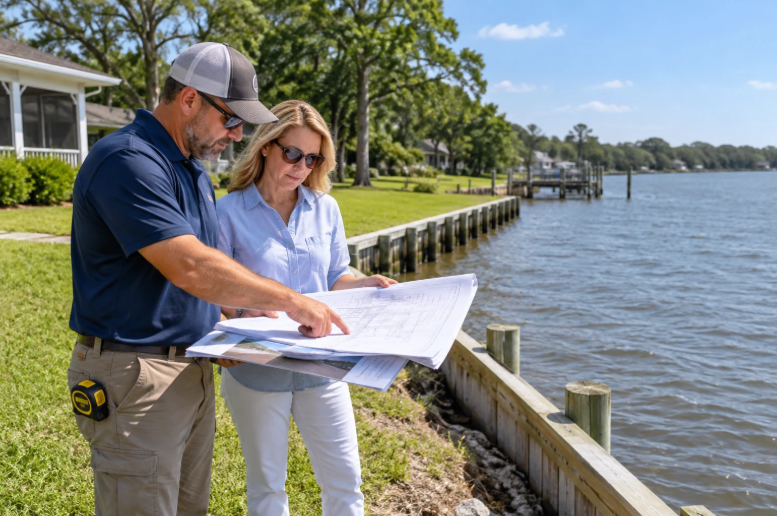
Bulkhead estimates are hard to compare until you know what is pushing the price up. Shore Protect Team publishes starting prices for wood, vinyl, concrete, riprap, gabions and repair. The same page also lists the conditions that move a real project away from those numbers.
The company's Shore Protect Team services go beyond shoreline walls: piling, docks, piers, retaining walls and repair work are on the list too. That matters if your property has more than one structure on the water. A good estimate shows which part of the money goes to the bulkhead and which part goes to everything next to it.
Material is the cost everyone looks at first. Wood starts at $150 per linear foot, vinyl at $200, concrete at $300, riprap at $150 and gabions at $200. The page says these starting figures cover labor and materials. Repair starts at $100 per foot.
None of these is a full project price. According to the FAQ, the final cost depends on the type of water body, the soil, the length of the wall, drainage, tie-back anchors, how easy the site is to reach, and whether it's new construction or a repair.
So before comparing bids, check that they rest on the same assumptions. One contractor may have priced drainage and anchors, while another quoted the wall and nothing else. The cheaper total can simply be a smaller job.
The page's list of bulkhead estimate factors is enough to build a working checklist. What you want is to pull the visible material cost apart from the structural and site work the wall needs to actually hold at your property.
Start with the material line item
Material is the easiest reference point because prices for the main bulkhead types are published. The page positions wood as the middle ground between cost and quality. Vinyl is pitched as durable and low maintenance. Concrete is the pick for harsh coastal conditions. Riprap and gabions protect the shore with rock, and they behave differently as structures.
An estimate that just says "bulkhead" is not enough. If it doesn't name the system, its per-foot figure means nothing next to another bid.
Wall material - Wood, vinyl, concrete, riprap or gabions.
Length - How many linear feet the proposal covers.
Foundation - Pile depth and reinforcement, based on the soil.
Drainage - Work that relieves groundwater pressure behind the wall.
Tie-back anchors - Restraint the wall needs for its height and the soil pushing on it.
Access - Extra labor and equipment when the terrain is difficult or there is little room to work.
Repair limits - Which sections and parts are covered when the wall is repaired rather than replaced.
Separate site conditions from optional upgrades
If the site needs drainage, anchors or deeper piles, they are not extras. The page treats them as part of how a bulkhead performs: some soils call for deeper piles, drainage takes groundwater pressure off the wall, and anchors keep soil pressure from pushing the wall out of place.
When one proposal includes these items and another leaves them out, ask first whether the two contractors read the site differently. Compare scope, then price.
Access deserves its own review
The FAQ puts a number on it: difficult terrain or limited room for equipment can raise labor costs by 20-40 percent. This has nothing to do with the wall material. Two finished bulkheads can look identical, and one still cost more because the crew had a hard time getting to it.
Ask how the contractor plans to reach the work area. Does the price assume direct land access, awkward handling, or a different construction method?
Confirm which bulkhead material is proposed and its starting per-foot price.
Check the total shoreline footage in the estimate.
Compare what each bid assumes about soil and pile depth.
See whether drainage and tie-back anchors are included where the site needs them.
Look at how access was priced.
Split repair footage from replacement footage.
Compare totals only when every proposal describes the same finished job.
Use the estimate to define the project, not just the price
A detailed estimate explains why the wall will be built this way. It ties the material to the water body, the foundation to the soil, the anchors to the pressure they hold back, the drainage to groundwater, and the labor to access.
Once you can see those links, the per-foot number starts to tell you something. A higher or lower price can then be traced to the material, extra structural work, a hard site, or a different project altogether.
Price exclusions are as important as inclusions
Read what the proposal leaves out. A price can look complete and still exclude removal, difficult access, anchor replacement, drainage, or anything past a set footage. The service page shows that each of these can change the scope, so the exclusions deserve as much attention as the total.
The comparison table doesn't need to be fancy. Columns for material, footage, foundation assumptions, anchors, drainage, access, repair or demolition, and restoration will do. A blank cell in one bid where another contractor put a price is a scope difference. Clear it up before you choose between totals.
The table also keeps you from setting a starting price against a finished project price. The published figures are a fair reference. The estimate's job is to turn them into a scope for your site that says exactly what will be built or repaired.
Ask which numbers are fixed and which are allowances
Some lines rest on measured footage and chosen materials. Others still depend on soil, access, or what the crew finds once work starts. Ask which items are firm and which are preliminary, so a provisional guess in one bid isn't weighed against a fixed price in another.
If you believe this article contains misleading, harmful, or spam content, please let us know.
Report this article




Quotes delayed at least 20 minutes.
By accessing this page, you agree to the Privacy Policy and Terms Of Service.