




Financial News
What Does Background Music Really Cost a Small Business?
A café owner wants a short video announcing a weekend event. The footage is ready, the captions are done, and somebody asks a deceptively simple question: "What music can we use?" The answer affects more than the video's mood. It can change the budget, the approval process, and where the finished ad can appear. One option is to make an original track with a service like AI Song. But that choice should be weighed against stock libraries, commissioned work, and the value of the team's time, rather than treated as automatically free or risk-free.
The Price Tag Is Only One Line of the Budget
Music decisions often begin with a subscription price or a quote from a musician. A business should also consider how long it takes to find a usable track, whether edits are included, and what happens if the ad needs another version next week. A cheap file can become expensive when nobody knows whether it may be used in a paid social campaign.
Consider the café video. It will run on the business's social accounts and perhaps as a paid advertisement. The owner wants a cheerful sound but needs space for spoken directions. Finding one track is not the only task. Somebody must check rights, choose the correct version, mix it beneath the voice, and keep a record of the source.
Those steps take time whether the business uses a professional musician, a music library, or a generator. The useful question is not simply "Which option costs least?" It is "Which option meets this specific brief with a manageable amount of work and uncertainty?"
Four Ways to Source Music, With Different Trade-Offs
There is no universal winner. What works for a one-day event may be inappropriate for a long-running advertisement that will appear across multiple platforms.
1. Choose a Stock Track When Speed and Predictability Matter
A stock library may suit a team that needs a familiar, broadly appealing background cue. The main work is searching and checking the license. Look carefully at whether the license covers paid ads, client work, geographic distribution, and future edits. Two tracks with similar prices may come with very different terms.
Also listen for distracting changes. A track built for general listening might contain a loud breakdown exactly when your narration delivers an address or offer.
2. Commission Music When the Brief Is Highly Specific
A composer can respond to exact timing notes and build music around a picture edit. That personal collaboration can be valuable for a brand film or campaign with a defined musical theme. It also requires planning: briefing, feedback, revisions, and an agreement covering ownership and permitted use.
A custom score is not automatically better for a simple café promotion. It is better when the extra control matters enough to justify the work.
3. Generate Candidates When You Need to Explore Options
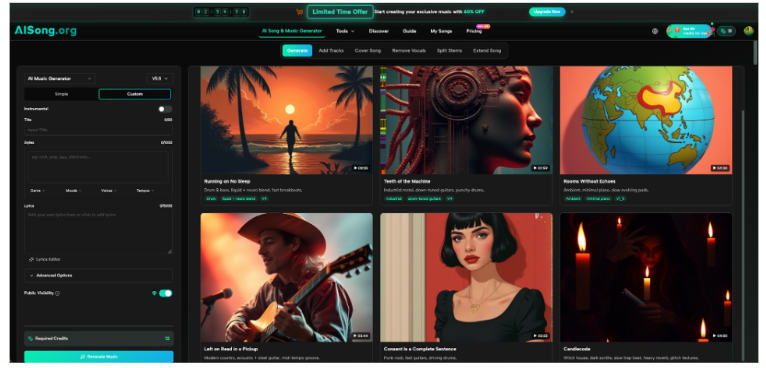
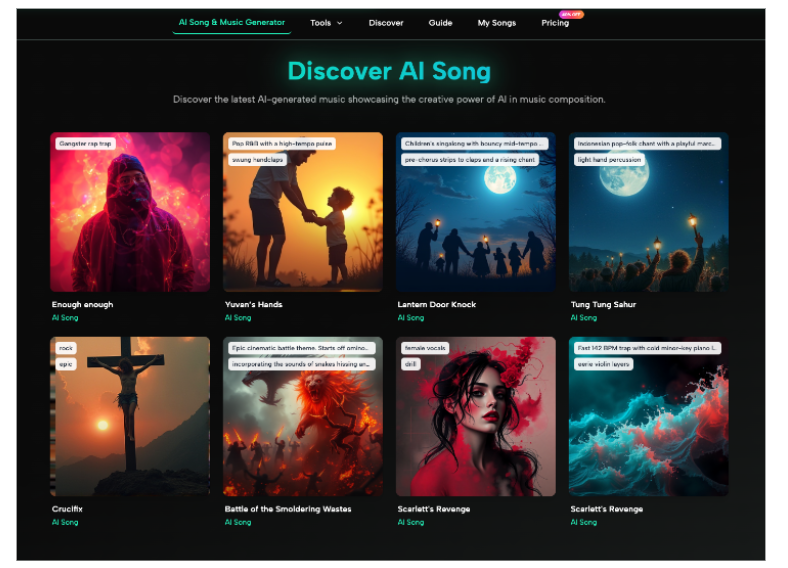
AI Music Generator can help a team test contrasting musical moods before it commits to one. AISong's public interface supports music descriptions, style choices, and an Instrumental setting. For a voice-led ad, requesting restrained instrumental music is a sensible starting point. You might compare "warm acoustic guitar, relaxed tempo" with "light funk rhythm, cheerful and tidy."
That comparison is useful even if neither output becomes the final soundtrack. It helps the owner hear what "upbeat" actually means for the video. The time spent reviewing candidates, checking usage terms, and editing remains part of the real cost.
4. Use Existing Music Only When Permission Is Clear
A familiar hit can create instant recognition, but being able to stream a song does not grant permission to place it in an advertisement. Music rights may involve the composition and the sound recording separately. Small businesses should not treat a social platform's personal-use music catalog as blanket approval for commercial campaigns.
If the rights are unclear, choose another route. Removing a questionable track before launch is easier than fixing a campaign after publication.
Compare Total Effort, Not Imaginary Savings
A practical comparison requires a small worksheet, not a dramatic claim that AI saves a fixed percentage. Create one row for each sourcing method and fill in only figures you actually know. Add estimated staff hours, outside fees, revision needs, and license scope. Mark unknown items as unknown rather than inserting attractive guesses.
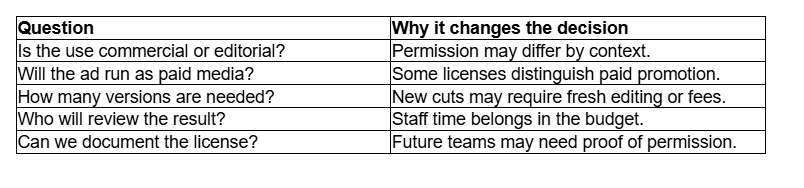
For example, a business might make a fifteen-second event video today and a longer recap next month. It should check whether its chosen arrangement will work in both edits. If a track must be rebuilt completely, the second video's production effort can change the initial decision.
Write a Brief Before You Spend Anything
A good music brief can fit on one screen. Name the video, audience, channel, approximate duration, narration needs, and desired feeling. Describe what the track must not do. "No vocals competing with the spoken offer" is more helpful than "make it professional."
For a bakery's morning promotion, a brief might request gentle instrumental music, a welcoming rhythm, and no sudden volume spikes. For a fitness studio's introductory tour, it might call for a steady beat that feels energetic without drowning out the instructor. These are different needs even if both videos advertise local services.
Then test two options against the actual cut. If the team disagrees, ask what specific moment sounds wrong. Do not hold a lengthy meeting about abstract musical taste. The decision should serve the message and the customer, not whoever has the strongest playlist preferences.
A Simple Approval Process Prevents Bigger Problems
Before an advertisement goes live, assign one person to verify the rights and one person to approve the final mix. They can be the same employee in a tiny business, but both checks still need to happen. Save the final audio file, its source, the relevant license or purchase information, and the campaign name in one shared folder.
Check the exact current terms of any service used, including plan eligibility and restrictions, rather than relying on promotional wording alone. If a customer or agency supplied the music, get written confirmation of the permitted uses. For higher-value campaigns, professional licensing advice may be worth more than another round of track comparisons.
Finally, listen on a phone speaker. That is where many viewers will encounter the ad. Music that sounded rich on office headphones can obscure dialogue or vanish beneath traffic noise on a small device. The mix is a business decision too: customers must hear the message.
Conclusion
Music is a small part of many video budgets, but a careless choice can create avoidable work. Businesses should compare stock tracks, commissioned scores, original generation, and licensed existing music against the same brief. Include staff time, revisions, rights checks, and delivery channels alongside the visible price. A short worksheet and a clear approval record are usually more useful than a sweeping claim about which option saves the most. For your next video, write a music brief first, then choose the sourcing method that best fits it.
If you believe this article contains misleading, harmful, or spam content, please let us know.
Report this articleMore News
View More




Recent Quotes
View MoreQuotes delayed at least 20 minutes.
By accessing this page, you agree to the Privacy Policy and Terms Of Service.