




Financial News
The Quiet-Car Problem: Why Silent EVs Change the Rules for Pedestrians in Cities Like Chicago
 The arrival of electric vehicles has changed more than what drivers see on the dashboard. It has changed what they hear. As luxury marques move toward electrification, the familiar rumble of an engine is giving way to a much quieter presence on city streets.
At parking-lot speeds and around busy crosswalks, that difference can matter. Pedestrians have long relied partly on engine noise to sense approaching traffic, but that instinct is less dependable around electric vehicles (EVs). The answer isn't to treat every quiet car as a threat. It's to understand how the technology works and adjust accordingly.
Why EVs Are Quiet and What Federal Law Requires
Electric motors produce less noise than combustion engines, especially at low speeds. Without the familiar sound of an idling engine or exhaust, an EV can approach pedestrians with little audible warning.
The alert-sound requirement
Federal Motor Vehicle Safety Standard No. 141 requires qualifying hybrid and electric vehicles to emit sounds that help pedestrians detect them. The standard covers stationary operation, forward movement at speeds up to approximately 19 mph, and reversing, with requirements varying by operating condition.
Following a phased implementation, the main compliance requirements took effect in 2020. The rule doesn't make EVs sound like conventional cars; it sets minimum sound requirements to improve detectability.
Even with these safeguards, pedestrians shouldn't rely on hearing alone. Traffic, headphones, weather, and surrounding buildings can make approaching vehicles harder to notice.
Pedestrian Risk in Numbers
The broader safety picture makes awareness essential, regardless of the vehicle's powertrain. According to the National Highway Traffic Safety Administration's 2023 pedestrian traffic safety fact sheet, 7,314 pedestrians were killed in U.S. traffic crashes in 2023, accounting for 18% of all traffic fatalities. An estimated 68,244 pedestrians were injured.
Darkness adds another challenge
NHTSA reported that 77% of pedestrian fatalities occurred in the dark. Urban areas accounted for 84% of pedestrian deaths, and most fatalities occurred away from intersections.
These figures don't establish that EVs cause more pedestrian deaths. They do show why visibility, driver attention, and pedestrian awareness matter in complex urban environments, where vehicles, cyclists, and people on foot share limited space.
Habits for Drivers and People on Foot
Quiet vehicles call for a little more attention from everyone sharing the road.
For drivers
● Reduce speed near crosswalks, driveways, and parking-garage exits.
● Scan for pedestrians before turning or reversing.
● Avoid assuming that someone has noticed the vehicle simply because it is approaching slowly.
● Keep windows, mirrors, and cameras clear enough to support awareness of the surroundings.
For pedestrians
● Make eye contact with drivers when possible, but don't assume it guarantees they have seen you.
● Keep one ear free of headphones near intersections and parking areas.
● Look for vehicles before stepping into a roadway, even when no engine can be heard.
● Use marked crossings and obey pedestrian signals.
These habits aren't a substitute for safe vehicle design or responsible driving. They help account for the limits of human attention in busy streets.
Who Has the Right of Way at a Chicago Crosswalk?
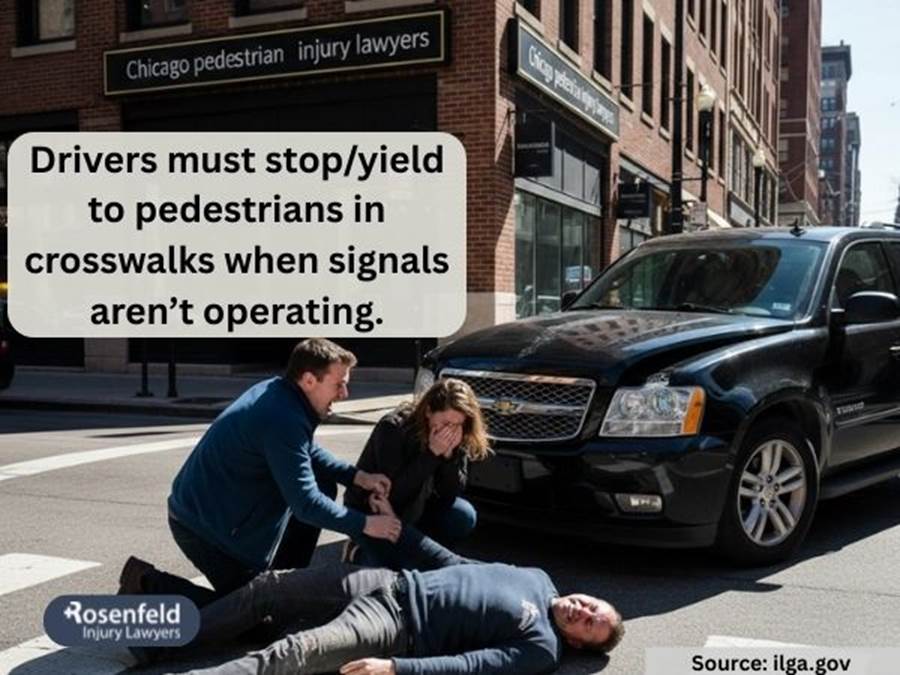
Illinois law sets out when drivers must yield to pedestrians at crosswalks. Under 625 ILCS 5/11-1002, when traffic signals are absent or not operating, drivers must stop and yield to a pedestrian crossing within a crosswalk when the pedestrian is on the driver's half of the roadway or is approaching closely enough from the opposite half to be in danger.
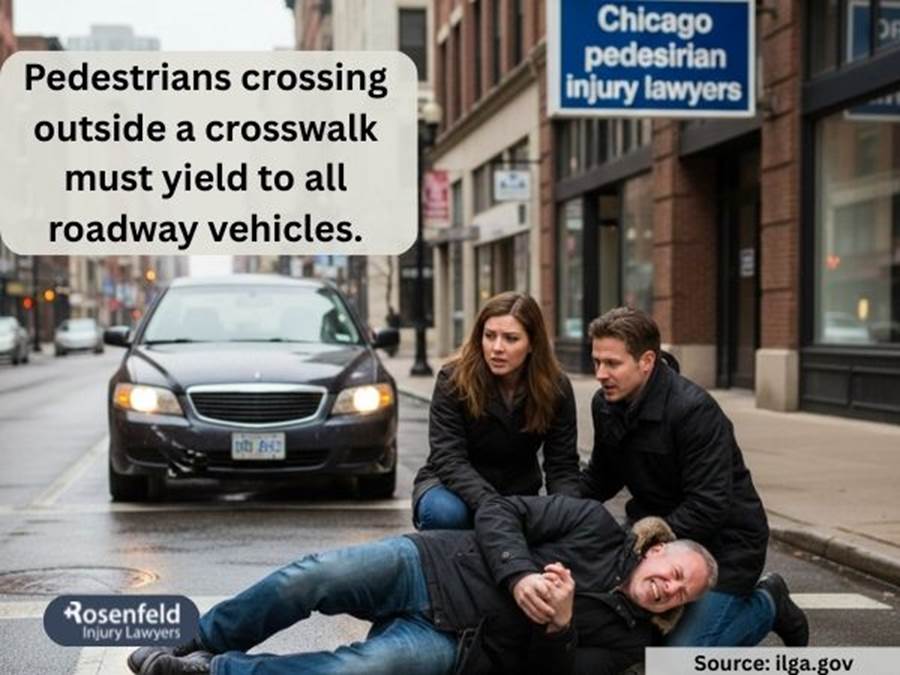
The law also prohibits a pedestrian from suddenly leaving a curb or another place of safety and entering the path of a vehicle so close that an immediate hazard exists. Traffic signals and other specific circumstances can affect how the rules apply.
Understanding who has the right of way at a Chicago crosswalk means recognizing that both the driver's duty to yield and the pedestrian's duty to exercise care matter. A vehicle's quiet operation doesn't remove a driver's legal responsibilities.
What Happens After a Pedestrian Is Hit?
A collision can be disorienting, and injuries aren't always immediately apparent. Calling 911 when necessary and seeking prompt medical attention should take priority.
When it is safe to do so, useful steps include:
● Recording the vehicle's make, model, color, and license plate.
● Collecting witness contact information.
● Photographing the scene and visible injuries, if practical.
● Identifying nearby businesses or traffic cameras that may have recorded the incident.
Video footage can be overwritten, so identifying potential sources promptly may help preserve relevant evidence.
The driver's liability insurance is often the first source considered for compensation. In a hit-and-run, an injured person's own uninsured motorist coverage may provide another avenue, depending on the policy and circumstances. Illinois also follows modified comparative fault rules: a claimant more than 50% at fault generally cannot recover damages, while a claimant at 50% or less may recover reduced damages.
In a city like Chicago, the pedestrian injury team at Chicago Auto Injury Lawyers may examine available evidence and applicable insurance coverage when assessing a pedestrian injury claim.
The Bottom Line
Quieter streets are one benefit of electric mobility, but pedestrians and drivers must adapt to a changing soundscape. Awareness, careful driving, and respect for crosswalk rules remain essential as cities become more electric.
This article provides general information only, not legal advice. Laws vary by state, and individual circumstances matter.
If you believe this article contains misleading, harmful, or spam content, please let us know.
Report this articleMore News
View More




Recent Quotes
View MoreQuotes delayed at least 20 minutes.
By accessing this page, you agree to the Privacy Policy and Terms Of Service.