




Financial News
Power, Intelligence, and Integration: A Deep Dive into NRG Energy (NRG) in 2026
Date: January 22, 2026
Introduction
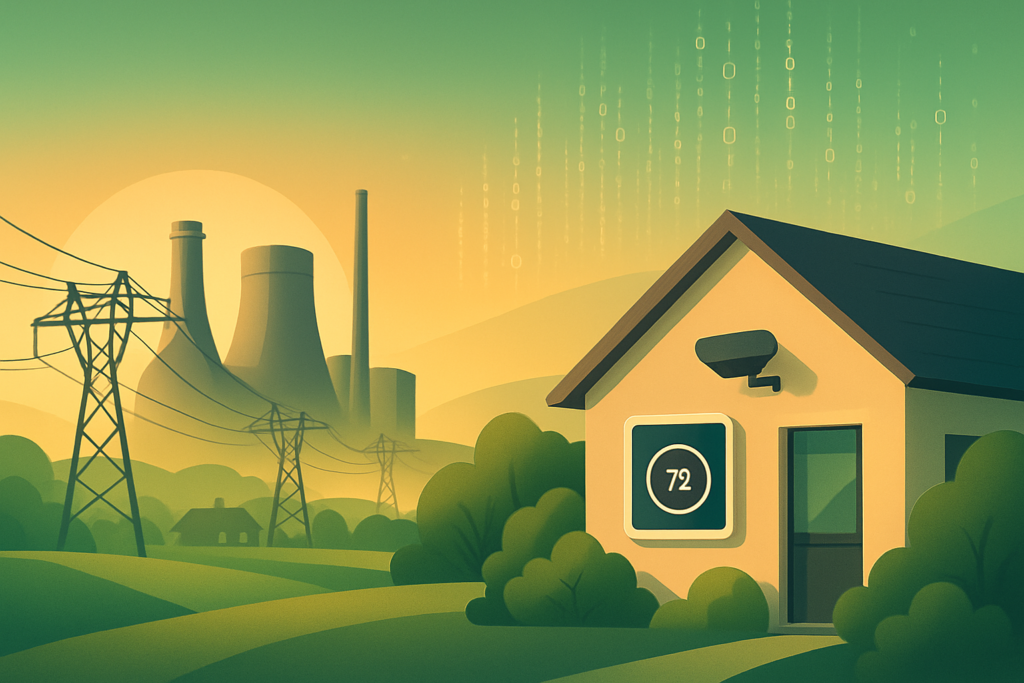
As of early 2026, the energy landscape in the United States has undergone a fundamental shift, moving from a commodity-driven utility model to a high-stakes race for grid reliability and technological integration. At the center of this transformation is NRG Energy (NYSE: NRG), a company that has successfully shed its image as a legacy power generator to become a diversified leader in essential home services and reliable energy. With the recent closing of its massive acquisition of LS Power’s generation portfolio and the full integration of Vivint Smart Home, NRG is now positioned as a unique hybrid of a tech-enabled retailer and a dominant power producer. In a market obsessed with the “AI power supercycle,” NRG stands out not just for the megawatts it produces, but for the millions of consumers it controls at the “edge” of the grid.
Historical Background
Founded in 1989 as a subsidiary of Northern States Power Company, NRG’s history is a case study in corporate resilience and strategic pivots. The company faced a near-existential crisis in the early 2000s, filing for Chapter 11 bankruptcy in 2003 following the fallout of the Western U.S. energy crisis. Emerging from restructuring, it spent years as a massive independent power producer (IPP) under the leadership of David Crane, who aggressively pushed into renewables.
However, the modern NRG was truly born in 2017. Under pressure from activist investors, including Elliott Management, the company launched a comprehensive “Transformation Plan.” This multi-year initiative involved divesting billions in non-core assets and slashing debt by $13 billion. The most radical shift occurred in 2023 with the $2.8 billion acquisition of Vivint Smart Home, a move that baffled many utility purists but laid the groundwork for NRG’s current “consumer energy” platform.
Business Model
NRG operates a highly integrated business model that bridges the gap between wholesale power generation and retail consumer services. The company’s revenue is derived from three primary segments:
- Retail Electricity: Through leading brands like Reliant, Direct Energy, and Green Mountain Energy, NRG serves approximately 8 million customers. It is the largest retail provider in the Texas (ERCOT) market, benefiting from high brand loyalty and sophisticated pricing strategies.
- Smart Home (Vivint): This segment provides security, automation, and energy management solutions. By bundling these services with electricity plans, NRG has achieved record-high customer retention rates and lower acquisition costs.
- Generation Fleet: Following the 2025 LS Power acquisition, NRG’s fleet has expanded to approximately 25 gigawatts (GW). The portfolio is now heavily weighted toward flexible, quick-start natural gas plants, which are critical for stabilizing grids heavily dependent on intermittent renewables.
Stock Performance Overview
NRG has been one of the standout performers in the utility and energy space over the last decade. As of January 2026, the stock has delivered a staggering 5-year total return of over 315%, vastly outperforming the S&P 500 and the Utilities Select Sector SPDR (XLU).
- 1-Year Performance: The stock rose over 40% in 2025, driven by the surge in demand from AI data centers and the successful financing of new gas-fired plants in Texas.
- 10-Year Trend: Long-term investors have seen NRG transition from a volatile, debt-laden IPP into a steady cash-flow machine, with the stock price reflecting its re-rating from a utility multiple to a higher-growth energy-tech multiple.
Financial Performance
Financial discipline has become the hallmark of the current management team. For the fiscal year 2025, NRG is expected to report an Adjusted EPS of approximately $8.08, a significant jump from 2024 levels.
- Revenue Growth: Revenue has seen steady mid-single-digit growth, bolstered by the “stickiness” of the Vivint platform.
- Cash Flow: The company maintains a robust Free Cash Flow before Growth (FCFbG) profile, targeting over $2 billion annually.
- Capital Allocation: NRG remains committed to its framework of returning 80% of excess cash to shareholders via dividends and buybacks, though it is currently prioritizing debt reduction to return to investment-grade metrics following the LS Power deal.
Products, Services, and Innovations
NRG is at the forefront of “grid edge” innovation. Its most notable advancement is the development of Virtual Power Plants (VPPs). By leveraging the 2 million interconnected homes in the Vivint ecosystem, NRG can orchestrate thousands of smart thermostats and batteries to reduce load during peak demand, effectively creating a “dispatchable” resource without building a single new power plant. Furthermore, its partnership with GE Vernova to deploy advanced gas turbines ensures that NRG’s physical generation remains some of the most efficient and low-emission in the fossil-fuel category.
Competitive Landscape
NRG competes in a “Big Three” landscape of deregulated energy giants, alongside Vistra Corp. (NYSE: VST) and Constellation Energy (NASDAQ: CEG).
- Vistra: Known for its massive nuclear and gas mix, VST is NRG’s primary rival in Texas.
- Constellation: The leader in carbon-free nuclear power, CEG often commands a higher valuation premium due to its pure-play green energy profile.
- NRG’s Edge: Unlike its peers, NRG owns the “last mile” of the consumer relationship through Vivint. While Vistra and Constellation sell bulk power to tech giants, NRG is building a moat around the residential consumer, making it less susceptible to wholesale price fluctuations.
Industry and Market Trends
The “Demand Supercycle” is the dominant theme of 2026. The explosion of AI data centers has created an insatiable need for 24/7 “firm” power. While renewables are growing, they cannot yet provide the baseload stability required by hyperscalers like Microsoft or Amazon. This has led to a renaissance for natural gas generation. Additionally, the “consumerization of energy”—where users actively manage their consumption via apps and smart devices—has moved from a niche hobby to a mainstream necessity as power prices remain volatile.
Risks and Challenges
Despite its strong positioning, NRG faces significant hurdles:
- Leverage: The LS Power acquisition was a multi-billion dollar bet that increased NRG’s debt load. Any prolonged period of high interest rates could weigh on the balance sheet.
- Regulatory Volatility: The ERCOT market in Texas is subject to frequent political scrutiny. Changes to market design or price caps can have outsized impacts on NRG’s retail margins.
- Commodity Exposure: While hedged, NRG’s earnings are still sensitive to natural gas prices and extreme weather events (e.g., Winter Storm Uri-type scenarios) which can cause massive price spikes in wholesale markets.
Opportunities and Catalysts
The primary catalyst for 2026 is the full realization of synergies from the LS Power integration, which is expected to add hundreds of millions to EBITDA. Furthermore, NRG is aggressively pursuing data center co-location agreements, where it can provide dedicated power directly to AI facilities at premium rates. The Texas Energy Fund, which provides low-interest loans for new dispatchable generation, is another tailwind; NRG has already secured $562 million to build its new Cedar Bayou facility.
Investor Sentiment and Analyst Coverage
Wall Street remains broadly bullish on NRG, with several analysts raising price targets toward the $200 range in early 2026. Institutional investors, including Vanguard and BlackRock, have maintained significant positions, viewing NRG as a “value” play compared to the more expensive Constellation Energy. The consensus “Strong Buy” rating reflects confidence in the company’s ability to generate cash while transitioning into a tech-centric service provider.
Regulatory, Policy, and Geopolitical Factors
NRG’s operations are heavily influenced by state-level policies in Texas and federal oversight by the Federal Energy Regulatory Commission (FERC). The current political climate favors “dispatchable” energy, providing a favorable backdrop for NRG’s gas-heavy fleet. However, evolving environmental regulations regarding carbon capture and methane emissions remain a long-term compliance cost that the company must navigate.
Conclusion
NRG Energy’s journey from a 2003 bankruptcy to a 2026 power and tech powerhouse is a testament to the value of strategic evolution. By integrating generation, retail, and smart home technology, the company has created a diversified ecosystem that is uniquely resilient to the shifts of the energy transition. For investors, NRG represents a sophisticated way to play the AI-driven power boom—offering a combination of infrastructure-backed stability and tech-driven growth. As the company transitions to new leadership under Robert Gaudette, the market will be watching closely to see if NRG can maintain its disciplined capital return while continuing to lead the “consumerization” of the American grid.
This content is intended for informational purposes only and is not financial advice.
More News
View More


Recent Quotes
View MoreQuotes delayed at least 20 minutes.
By accessing this page, you agree to the Privacy Policy and Terms Of Service.