




Financial News
Why Enterprise Cloud Leaders Are Bringing Database Reliability, DevOps, and Infrastructure Under One Strategy
CORPUS CHRISTI, TX / ACCESS Newswire / November 23, 2026 / As organizations distribute critical workloads across multiple public clouds, private infrastructure, and on-premises environments, engineering leaders increasingly have to solve several problems at once: reliability, automation, database resilience, security, observability, disaster recovery, and cost optimization.
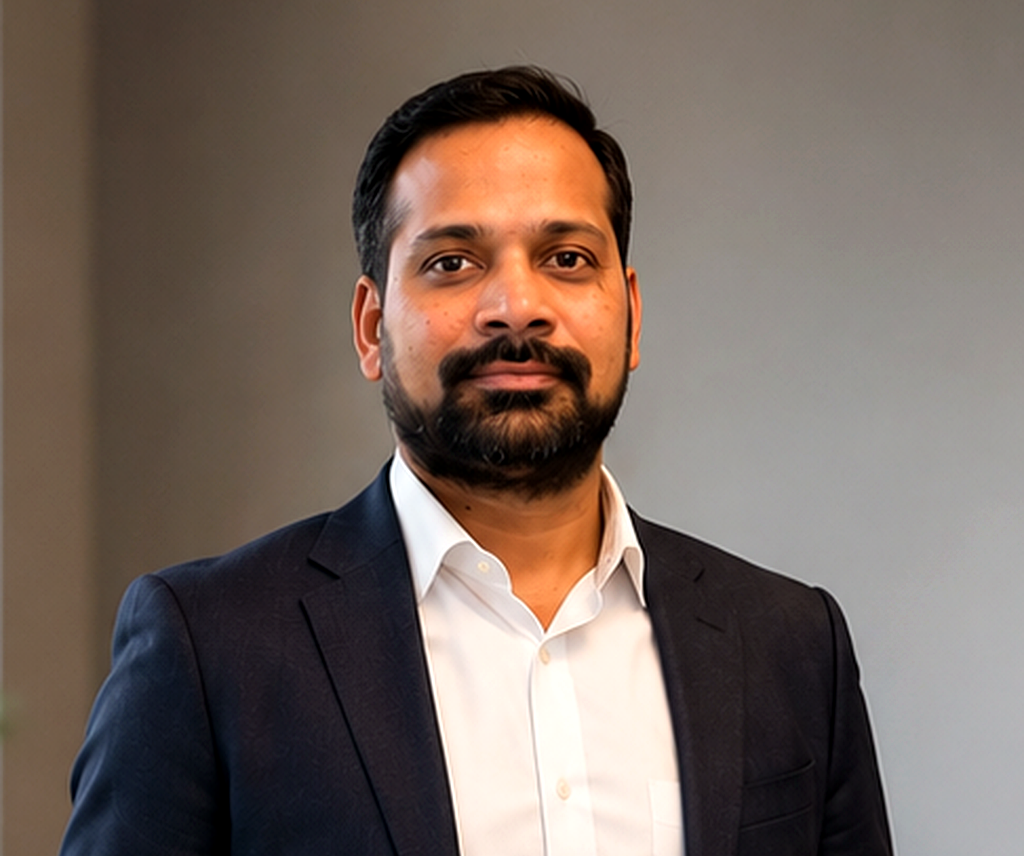
Kiran Reddy Sudini, an engineering and technology leader with more than 12 years of technology experience, has built his career at the intersection of those disciplines. Sudini currently leads multidisciplinary teams across five technical functions, with responsibilities spanning cloud infrastructure engineering, DevOps and release engineering, reliability engineering, electronic data interchange, and database and network operations.
That breadth represents an important change in the way modern enterprises operate technology. Functions that were once managed separately are increasingly interconnected as organizations build and maintain complex cloud and hybrid environments.
The Database-to-Cloud Engineering Pipeline
Sudini's career began deep in enterprise database engineering. He worked with databases supporting mission-critical systems and gained hands-on experience in backup and recovery, performance tuning, migrations, upgrades, replication, and high availability.
His responsibilities later expanded through high-availability database engineering, Database-as-a-Service, autonomous database technologies, cloud infrastructure, and senior site reliability engineering.
During that progression, Sudini worked with cloud and database development teams, diagnosed complex product and infrastructure problems, supported high-priority technical issues, and contributed to the architectural design and development of large-scale database backup and recovery cloud service capabilities.
His technical work has also covered areas that remain central to enterprise database operations, including cloud-based backup and recovery, object and archive storage, autonomous database technologies, SQL diagnostics, execution-plan stability, database upgrades, corruption prevention, and database integrity checking.
Those subjects may appear specialized, but collectively they address a much larger business concern: how enterprises keep valuable data available, protected, and recoverable while the infrastructure supporting it continues to change.
DevOps Changes the Operating Model
Sudini's progression into engineering leadership reflects another significant shift in enterprise technology. Instead of treating development, infrastructure, databases, reliability, and release engineering as isolated disciplines, organizations increasingly connect them through automation, shared operational practices, and common reliability objectives.
In his current leadership role, Sudini has worked to accelerate modern CI/CD adoption and transform traditional delivery processes into more automated and continuous operations. His teams apply Infrastructure as Code and cloud engineering practices to standardize environments, improve repeatability, and reduce manual operational work.
That approach matters because cloud complexity can scale faster than engineering headcount. Automation can make infrastructure configurations repeatable. CI/CD can make releases more controlled and predictable. Observability can help engineering teams identify emerging problems before they become major disruptions. Disaster-recovery architecture can limit the operational consequences of failures and provide a defined path toward recovery.
The objective isn't automation for its own sake. It is operational consistency, resilience, and the ability to manage increasingly complex environments at scale.
Reliability Is Becoming an Executive Issue
Cloud outages and data failures are no longer problems confined to an IT department. They can interrupt revenue-generating activities, customer experiences, employee productivity, supply chains, regulatory processes, and essential business operations. That makes reliability increasingly relevant to executive decision-making.
Sudini's current responsibilities include large-scale infrastructure initiatives, cloud migrations, data-center operations, disaster-recovery architecture, security measures, environment management, and cloud cost optimization. He also works with management and business stakeholders on architectural requirements and technology decisions.
That intersection between engineering and business priorities is increasingly important. A technically sophisticated architecture still has to be evaluated in terms of cost, risk, security, scalability, operational impact, and the needs of the organization.
Sudini's experience reflects an emerging model of engineering leadership, bringing together expertise in databases, infrastructure, deployment practices, and reliability with an understanding of broader business and operational requirements.
Hybrid and Multicloud Environments Are Changing the Strategy
The technology industry has spent years discussing migration to "the cloud" as though cloud computing were a single destination. Enterprise reality is often more complicated.
Organizations can simultaneously operate applications and data across multiple public clouds, private infrastructure, and on-premises environments. Legacy systems may remain essential. Security and regulatory requirements can influence where workloads and data reside. Different business units may also depend on technology environments built at different times and for different operational needs.
That complexity changes what cloud expertise means. The next phase of cloud transformation may depend less on expertise in a single platform and more on the ability to apply portable operational principles across environments: automated deployment, measurable reliability, resilient data, tested recovery, strong observability, repeatable infrastructure, security controls, and disciplined governance.
For engineering leaders, the challenge is to establish those principles consistently while allowing individual technologies and platforms to evolve.
From Technical Reliability to Business Resilience
The convergence of database engineering, DevOps, cloud infrastructure, and site reliability reflects a broader shift in how enterprises think about technology operations.
A database cannot be considered resilient if the infrastructure supporting it is fragile. Infrastructure automation delivers limited value without visibility into system health. A deployment pipeline cannot be considered mature if changes cannot be recovered safely. And cloud scalability matters little if operating costs, security, and reliability cannot be controlled.
These disciplines increasingly have to work as parts of the same engineering strategy. That is also why engineering leadership is becoming more cross-functional. The challenge is no longer simply to keep individual systems operating. It is to create an environment in which applications, data, infrastructure, automation, security, monitoring, and recovery processes reinforce one another.
For technology leaders, that changes the central cloud question.
It is no longer merely, "Where should this workload run?"
Increasingly, the question is: How do we engineer it so the business can depend on it wherever it runs?
About Kiran Reddy Sudini
Kiran Reddy Sudini is an engineering and technology leader with more than 12 years of experience across database engineering, cloud infrastructure, Site Reliability Engineering, DevOps, automation, and development operations. He leads multidisciplinary technical teams responsible for mission-critical technology environments.
His professional focus includes scalable cloud infrastructure, enterprise database technologies, automation, Infrastructure as Code, disaster recovery, observability, operational resilience, cost optimization, and engineering leadership.
Media Contact
Email: Kiranreddysudini.9@gmail.com
Country: United States
LinkedIn: http://linkedin.com/in/kiran-sudini-msc-56723132
SOURCE: Kiran Reddy Sudini
View the original press release on ACCESS Newswire
If you believe this article contains misleading, harmful, or spam content, please let us know.
Report this article

Quotes delayed at least 20 minutes.
By accessing this page, you agree to the Privacy Policy and Terms Of Service.