




Financial News
Is ChIP Still Enough? CUT&Tag is Emerging as a New Standard in Epigenetics
Epigenetic research is entering a stage where chromatin profiling is increasingly defined by high-resolution, low-input technologies rather than traditional workflows.
Understanding gene regulation requires mapping DNA-protein interactions, identifying transcription factor binding sites, and profiling histone modifications. In many diseases—especially cancer—biological outcomes are not driven solely by genetic mutations. Epigenetic regulation plays a critical role.
Epigenomic technologies are now widely used across fields such as cancer research, stem cell and developmental biology, immunology, and single-cell genomics.
For more than two decades, researchers have relied on Chromatin Immunoprecipitation sequencing (ChIP-Seq) to study chromatin regulation. However, with the rise of low-input samples, single-cell technologies, and high-resolution epigenomics, traditional ChIP-Seq faces increasing challenges in experimental efficiency, sample requirements, and signal-to-noise ratio.
A new and powerful technique—Cleavage Under Targets and Tagmentation (CUT&Tag)—has rapidly gained attention as a more sensitive and efficient approach for chromatin profiling.
How did CUT&Tag rise so quickly? We’ll walk through the technological evolution from ChIP-Seq to CUT&Tag.
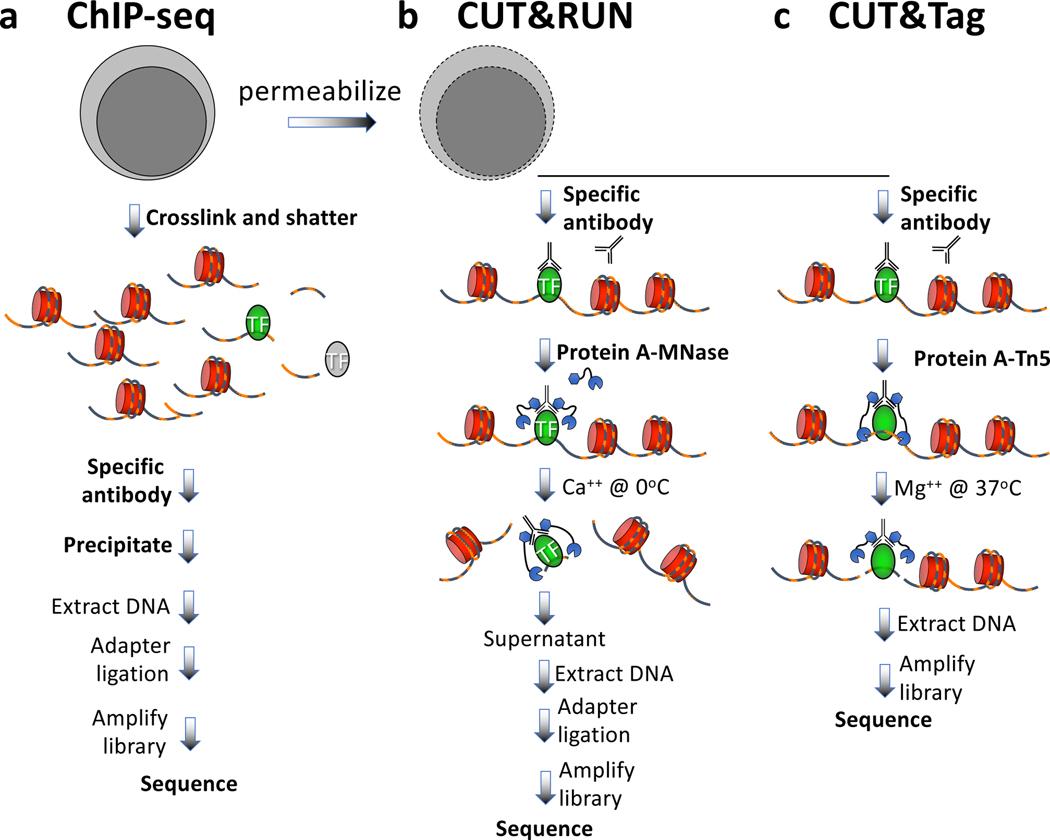
Fig.1 From ChIP-Seq to CUT&Tag: The evolution of chromatin profiling[1].
a. ChIP-Seq—the classic method: Genome-wide mapping of protein-DNA interactions; requires crosslinking, chromatin fragmentation, and relatively high cell input.
b. CUT&RUN—lower background: In situ cleavage using antibody-guided MNase, reducing background and improving signal specificity.
c. CUT&Tag—higher sensitivity: Targeted fragmentation with pAG-Tn5 enables high-sensitivity chromatin profiling with low input and a simplified workflow.
ChIP-Seq: The classic approach
ChIP-Seq enriches DNA fragments bound by specific proteins through immunoprecipitation, followed by high-throughput sequencing to identify binding sites across the genome. A typical workflow includes crosslinking, chromatin fragmentation, antibody immunoprecipitation, DNA purification, and library preparation[2].
Despite its widespread use, ChIP-Seq has several limitations:
• Long experimental time (typically 4 - 7 days)
• High sample input requirements
• Crosslinking variability that may introduce false positives or negatives
• Challenging optimization of chromatin fragmentation
• High background noise in sequencing data
As epigenetic research moves toward lower input, higher resolution, and more streamlined workflows, new technologies such as CUT&Tag have emerged to address these challenges.
CUT&Tag: A next-generation chromatin profiling method
CUT&Tag uses a Protein A/G-Tn5 transposase to bind antibodies and directly tag and cleave DNA at target sites in situ. After PCR amplification, sequencing-ready libraries can be generated directly[3].
Compared with ChIP-Seq, CUT&Tag offers several advantages:
• No crosslinking or sonication required
• Much lower background noise
• Higher signal-to-noise ratio
• Compatible with very low cell input (hundreds to thousands of cells, even ~10 cells)
• Fast workflow — completed within one day
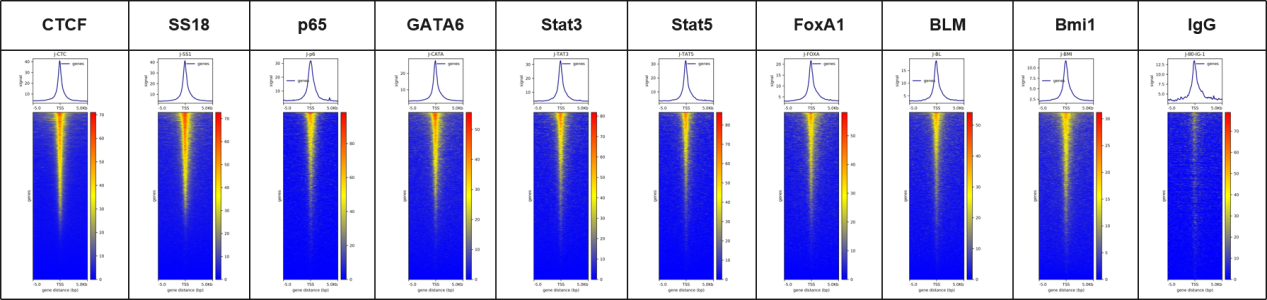
Fig. 2 CUT&Tag reveals cleaner chromatin profiles with a markedly higher signal-to-noise ratio.
With ultra-low input requirements, efficient library preparation, and superior sequencing efficiency, CUT&Tag is particularly well suited for rare samples and multi-omic studies, enabling high-resolution exploration of epigenetic regulation.
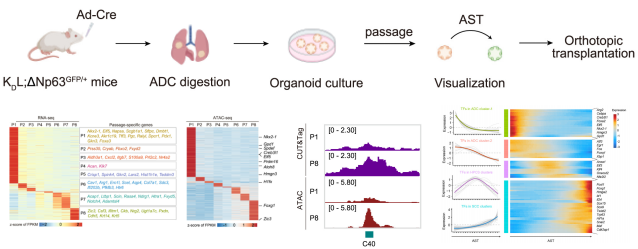
Fig. 3 Multi-omic profiling reveals resistance to KRAS inhibition in LKB1-mutant lung cancer.
As research questions become more complex, traditional ChIP-Seq often struggles to deliver optimal data quality. CUT&Tag, with its low input requirement, high sensitivity, and streamlined workflow, is rapidly emerging as a powerful new approach for epigenetic profiling.
If you are studying transcription factor binding, histone modifications, or epigenomics with limited input material, CUT&Tag offers an efficient and reliable solution.
1. Kaya-Okur, H. S., Janssens, D. H., Henikoff, J. G., Ahmad, K. & Henikoff, S. Efficient low-cost chromatin profiling with CUT&Tag. Nature Protocols 15, 3264–3283 (2020).
2. Johnson, D. S., Mortazavi, A., Myers, R. M. & Wold, B. Genome-wide mapping of in vivo protein–DNA interactions. Science 316, 1497–1502 (2007).
3. Kaya-Okur, H. S. et al. CUT&Tag for efficient epigenomic profiling of small samples and single cells. Nature Communications 10, 1930 (2019).
4. Li, X. et al. Adeno-to-squamous transition drives resistance to KRAS inhibition in LKB1-mutant lung cancer. Nature 605, 764–773 (2022).
Media Contact
Company Name: Vazyme
Email: Send Email
Country: China
Website: https://www.vazymebiotech.com/
If you believe this article contains misleading, harmful, or spam content, please let us know.
Report this articleMore News
View More



Recent Quotes
View MoreQuotes delayed at least 20 minutes.
By accessing this page, you agree to the Privacy Policy and Terms Of Service.